


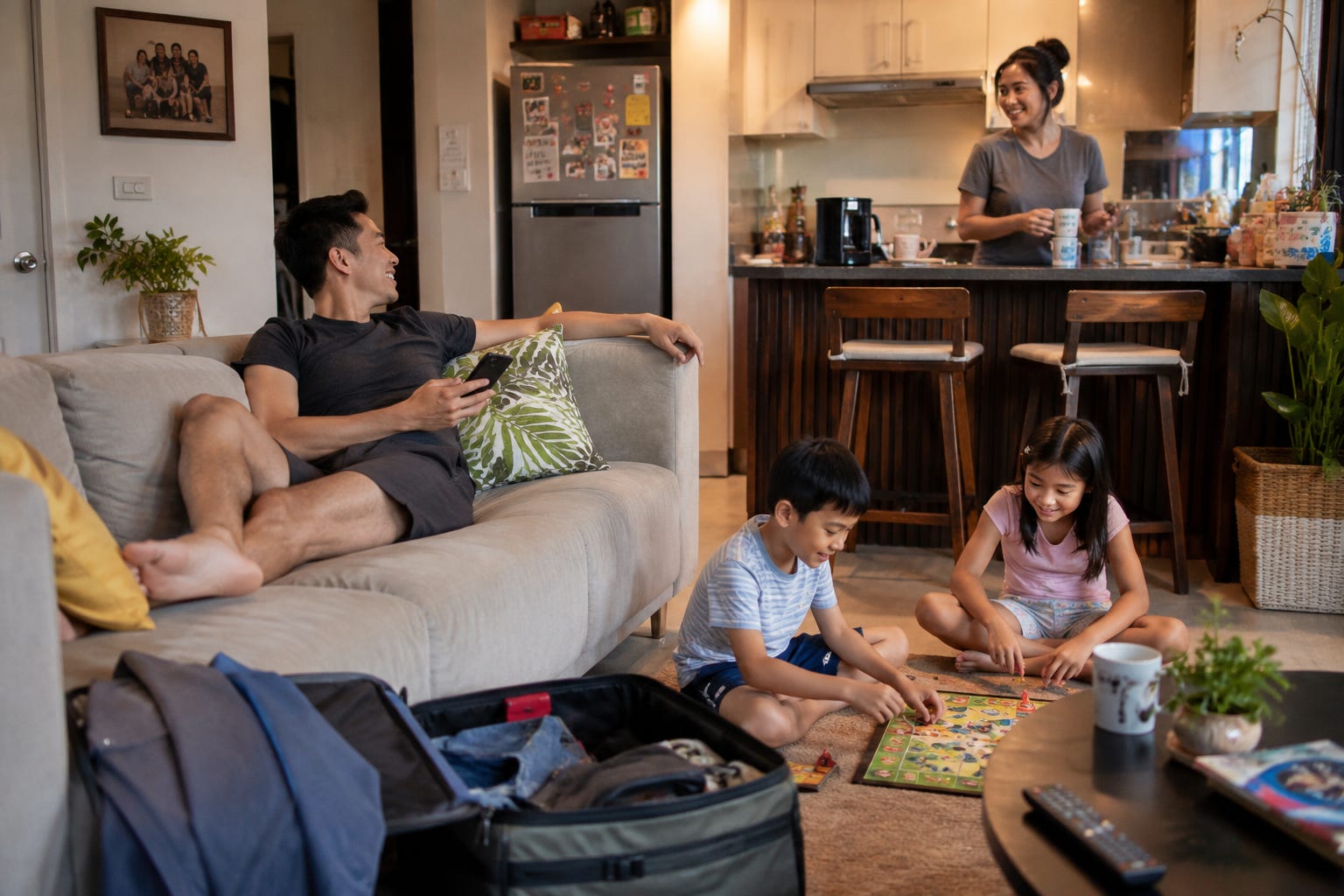
In the landscape of global cultures, the Filipino family is often held up as a gold standard of solidarity. We are the people of utang na loob (debt of gratitude), pagmamalasakit (deep care), and close family ties.
But if you’re Filipino, you know that “close” is often a polite word for “entangled.” To live in a Filipino family is to live in a state of perpetual, beautiful, and often infuriating chaos.
It is a special kind of messiness born not out of a lack of love, but out of an abundance of it that refuses to recognize boundaries.
Love Without Boundaries
In most Western cultures, adulthood is defined by independence. When you move out, you create a sanctuary. Guests, even family, are expected to call ahead, ask how long they can stay, and offer a clear exit strategy.
But in the Philippines, the concept of a sibling being a “guest” in another sibling’s home is practically a foreign dialect. As you’ve noted, siblings are meant to overstay their welcome. There is an unspoken rule that the threshold of a sibling’s house is a portal back to childhood.
The moment a brother or sister walks through the door, the professional titles and adult boundaries vanish. They don’t ask to stay; they simply put their bags down. They don’t ask for permission to open the fridge; they complain that there’s no ulam left.
This is the “over-everything” factor. They overbear, they overstay, and they over participate in your life. And very often, we allow it. Sometimes, we even expect it. Because to ask a sibling “When are you leaving?” is seen as a betrayal of the blood.
We accept the mess because the alternative clean, quiet house where no one overstays is an empty one. In the Filipino psyche, a sibling’s presence is a permanent right, not a temporary privilege.
The Weight of Belonging
The high-stakes expectations of Filipino parents further complicate this messiness. In our culture, a child’s success is rarely seen as an individual achievement; it is a family investment. From the moment a child is born, parents “dream big,” not just for the child’s sake, but for the upliftment of the entire clan.
This creates a unique psychological pressure. The “successful” child becomes the atleta carrying the hopes of the family on their back. If you are the sibling who “made it,” your home becomes the default landing pad for everyone else. If you are a sibling who is struggling, the expectation is that your brother or sister will catch you, no questions asked.
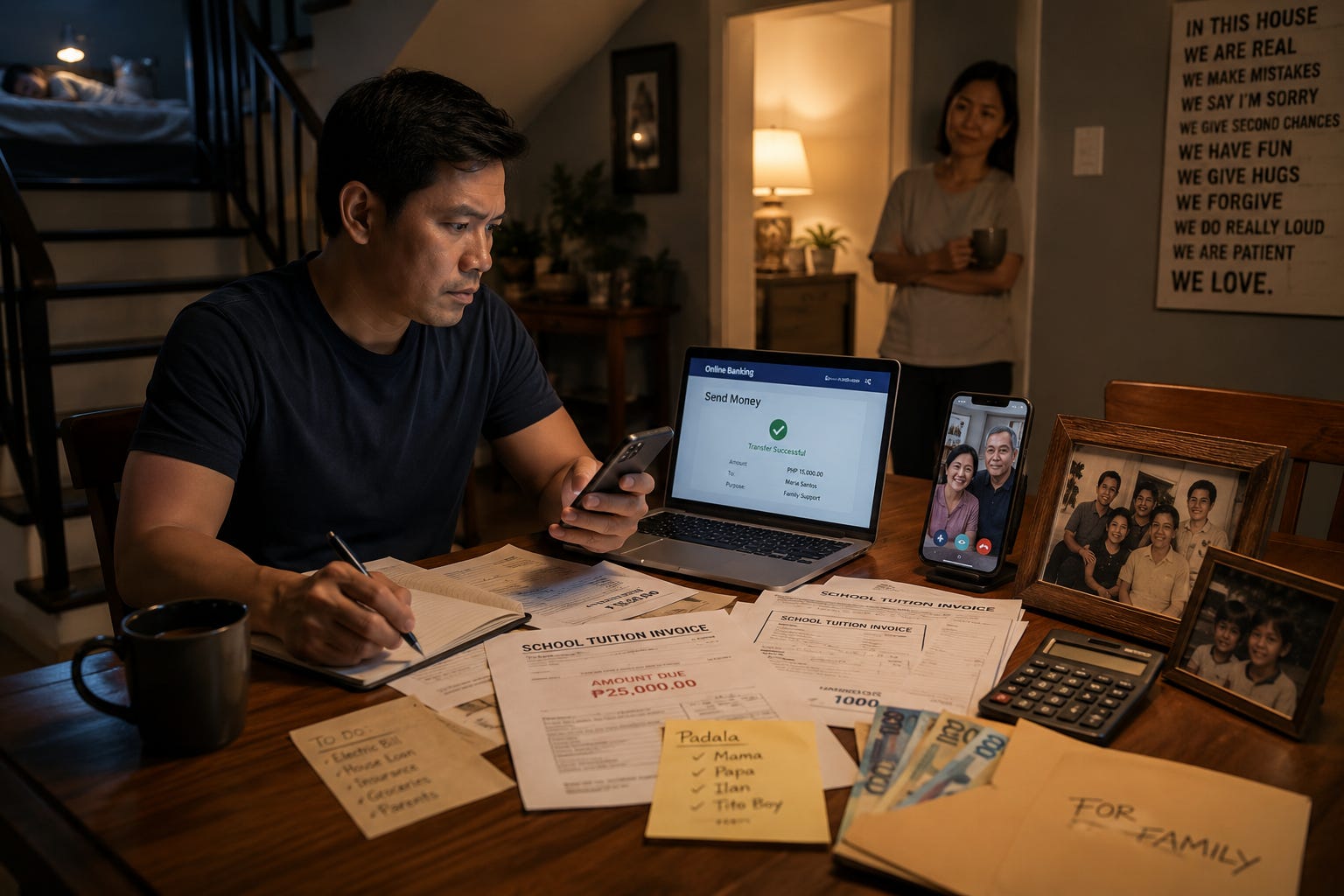
This is where the “mess” turns into a complex web of obligation. Family history demands that siblings help siblings. To us, a family is a safety net that never breaks, even when the weight of everyone hanging on it can sometimes feel like a noose.
We see siblings supporting nieces and nephews, paying for tuition, or housing a brother for years, all while navigating their own nuclear family’s needs. No apologies necessary. A “sorry” implies that the help was a burden, and in a Filipino family, helping is supposed to be “automatic.”
The Beauty of the Mess
There is a deep, quiet dignity in the way Filipino families handle their mess. Often, the sibling who is overstaying knows exactly how much of a burden they are. They see the cramped space; they hear the whispered arguments between their sibling and their spouse. But they stay, and the host sibling keeps the door open.
This “no questions asked” policy is the ultimate expression of Filipino love. It is the refusal to shame a family member for their proximity or their need. We allow the overbearing aunt to comment on our weight, the overstaying brother to hog the remote, and the parents to demand more of our time because we recognize that these people are the only ones who will be there when the rest of the world turns its back.
It is a mess of blurred lines. Where does my life end and my sisters begin? Where do my mother’s dreams stop, and my own career choices start? In a Filipino family, those lines don’t exist. We are a “package deal.”
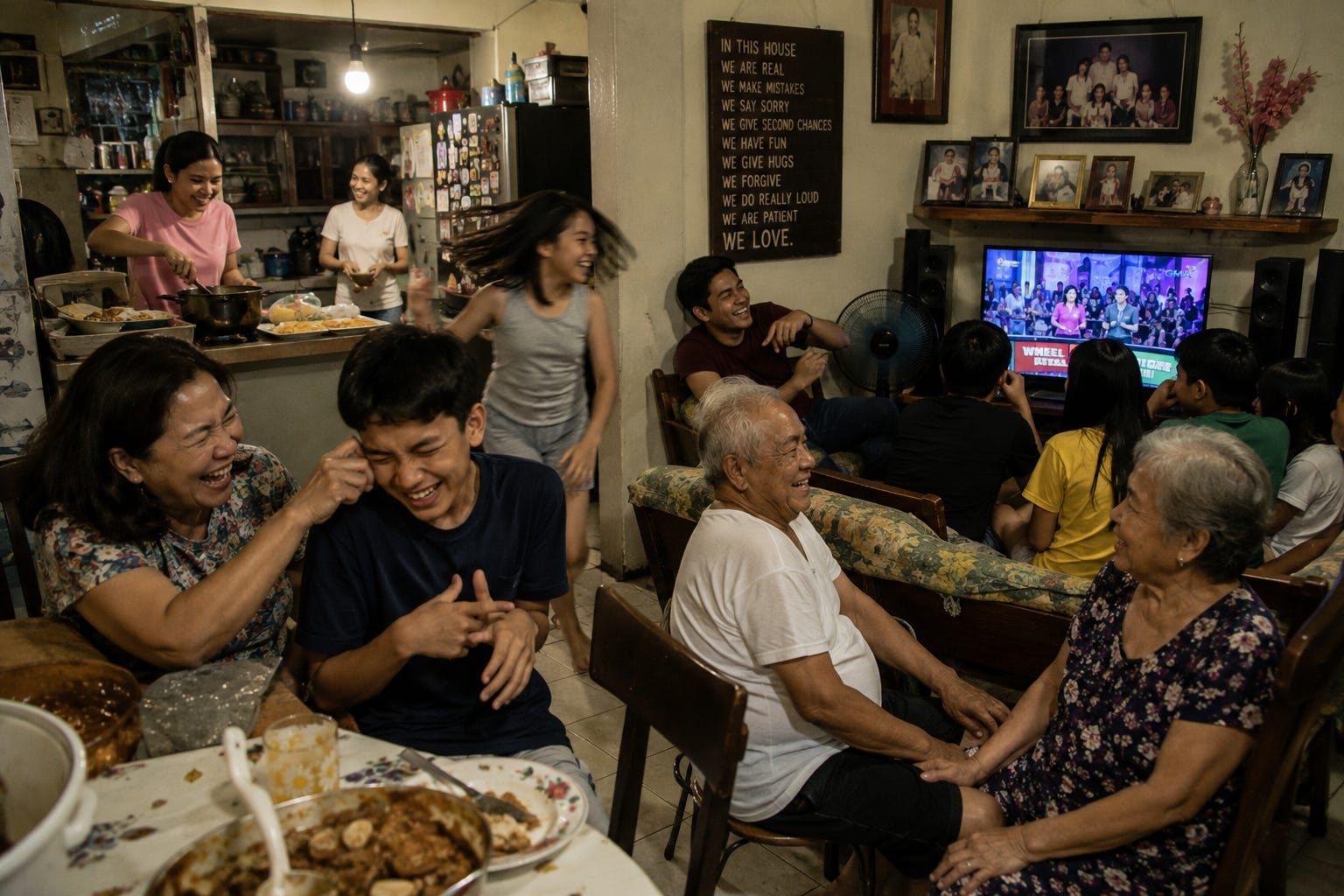
Think of the Filipino family like bagoong (fermented shrimp paste). To an outsider, it might smell strong, look unappealing, and seem far too salty. It’s “messy” in its very composition. But to those who know it, it is the essential flavor that completes the meal. It provides depth, soul, and salt to life.
We complain about the lack of privacy. We vented about meddling. We roll our eyes when another cousin asks for a “loan” that we know will never be repaid. But notice that even when we complain, we usually do it while we’re cooking a meal for them. We are venting about them while we’re making sure their bed is ready.
Always Room for One More
This messiness is our greatest strength and our most exhausting reality. In a country where social systems can be fragile, the family is the only institution that truly functions 24/7. It is our healthcare, our insurance, our retirement plan, and our therapy - all rolled into one chaotic, noisy, overbearing unit.
We don’t need “sorrys” because the bond is understood to be sturdier than the friction. We don’t ask for “thank yous” because you don’t thank your own hand for feeding your mouth. Tolerating the mess is the price we pay for never having to be alone.
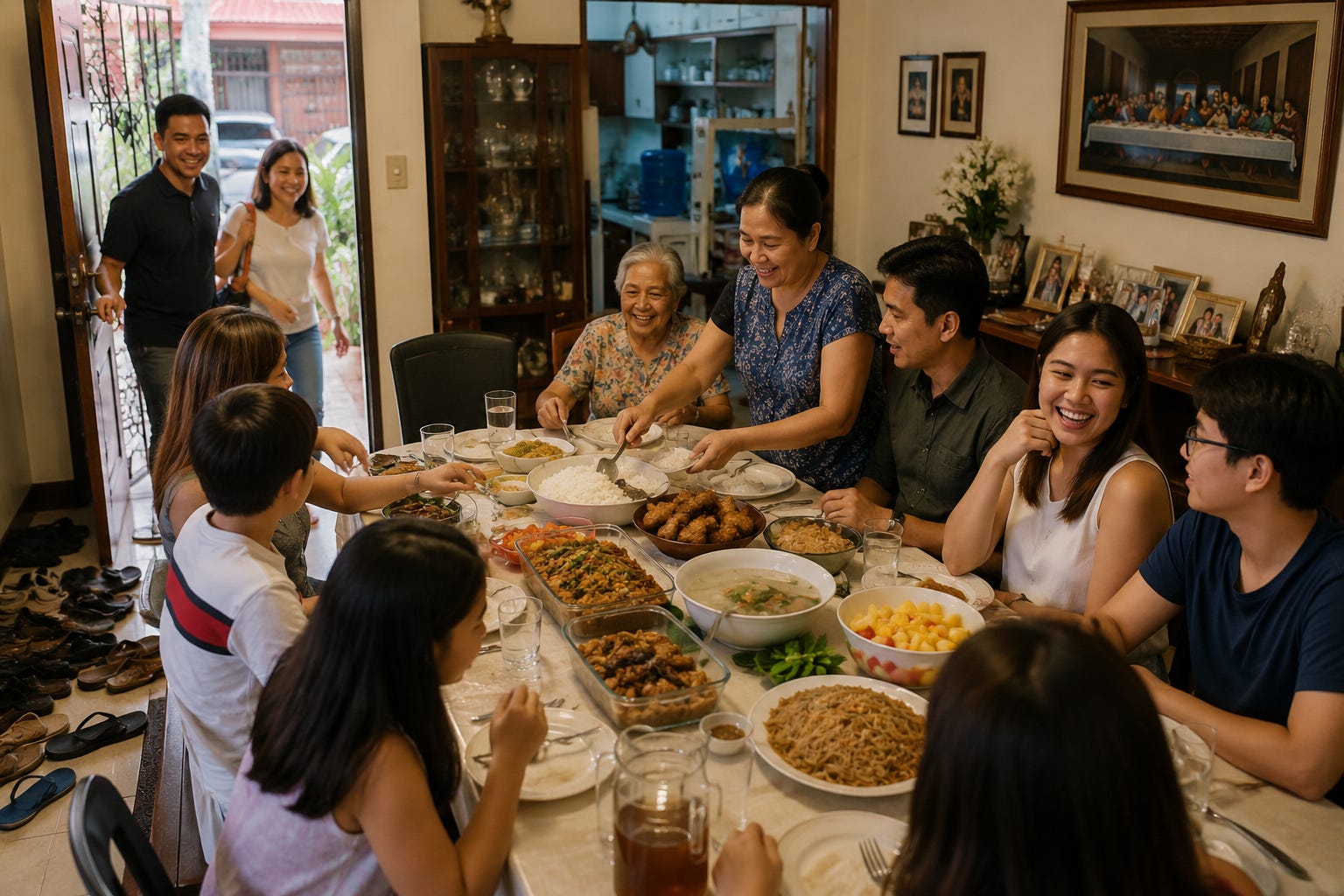
Yes, sometimes, it does feel like we do not have a choice. But we embrace this mess. We welcome overstaying siblings. We live up to our parents’ dreams. We give to relatives with hands outstretched for more. Our family is not perfect. It’s often loud, intrusive, and incredibly frustrating.
But it is a special kind of mess that belongs only to us. This is home to us. It is always full. Our table always has room for one more. And our hearts, despite the lack of boundaries, never run out of space.
In the end, the Filipino family is a beautiful disaster of unconditional belonging. And in this messy world, perhaps that’s the only thing that actually makes sense.
"Think of the Filipino family like bagoong (fermented shrimp paste). To an outsider, it might smell strong, look unappealing, and seem far too salty. It’s “messy” in its very composition. But to those who know it, it is the essential flavor that completes the meal. It provides depth, soul, and salt to life."
I have bagoong within reach right now ... as I write this. :)
"... It provides depth, soul, and salt to life."
You said it! :)
One reason why Filipino families are messy is because of the lack of clear communication. It might ruffle feathers, but more “sorrys” and “thank yous” bring peace and clarity to the situation and relationship as a whole. I think it is time Filipino families start saying what is unsaid. All the guessing and some of the mess can be avoided by swallowing ones pride or fear and saying things out loud.