


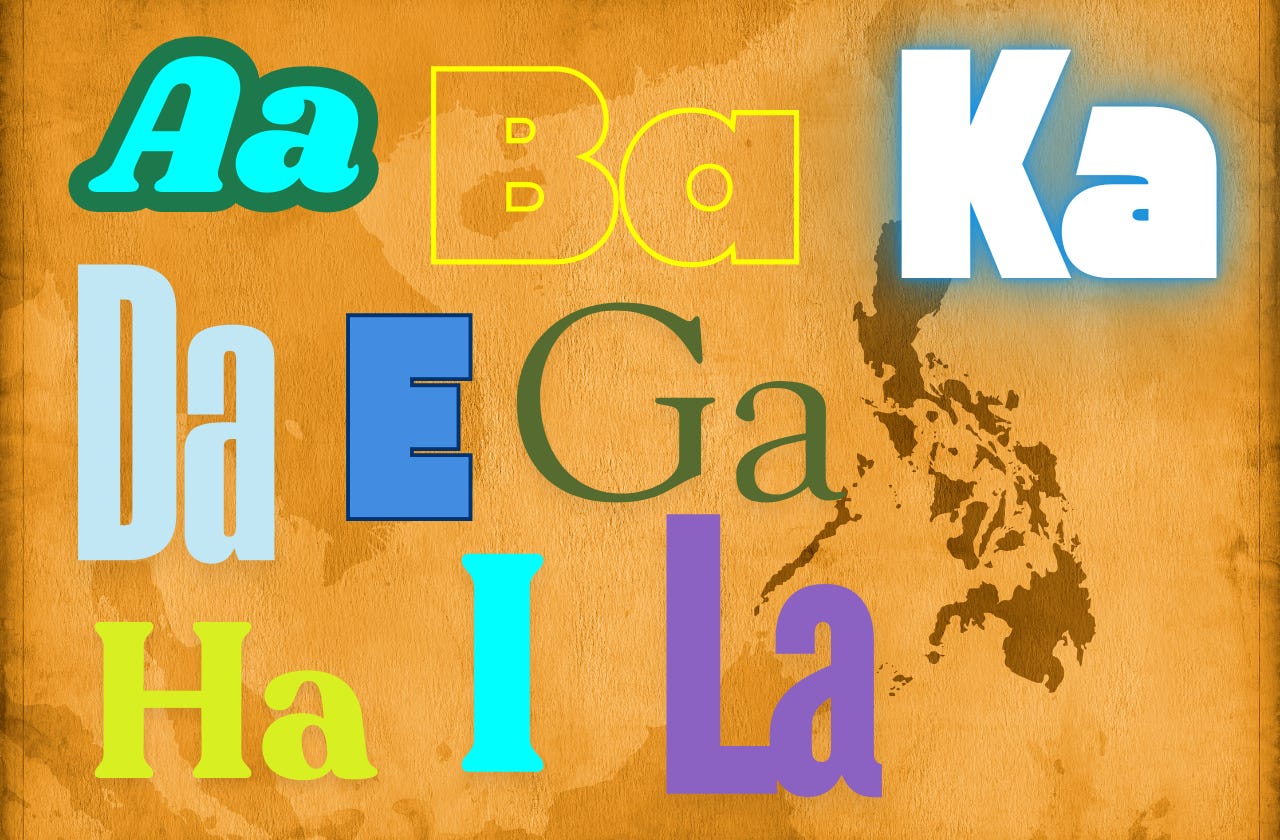
Nothing is arguably a bigger cultural marker of a nation than its language. It is the biggest indicator of a nation’s culture, as alongside values and ethos, it is the best example of a living and breathing society.
The Tagalog language, original to the Katagalugan, or “Land of the Tagalogs”, has a territorial domain encompassing much of southern Luzon and a few islands directly south, including Mindoro and Marinduque. Today there are 33 million L1 (First Language) speakers and an additional 54 million L2 (Second Language) speakers, all scattered throughout the archipelago and in the diaspora.
Tagalog is basically the basis of the national language, known as Wikang Filipino, used in national media, taught in education, and is the lingua franca of the nation. Some may argue that Wikang Filipino and Tagalog are separate languages, but in practice, the two are largely the same and are often interchangeable, given that a vast majority of the lexicon in Wikang Filipino comes from Tagalog, with only a small number of words coming from other local languages.
Origins
Tagalog is part of the Central Philippine language branch within the wider Austronesian language family, a language family that includes Bahasa Malaysia, Ilocano, Waray, Javanese, Sundanese, Balinese, Tetum, Samoan, and Yami.
The name of the language and the people indicate a population that lived on the rivers, and a language spoken on said rivers. Tagalog, or “taga-ilog”, meaning “from the river”, denotes the importance of river systems for the original people, with Pasig River being one of the most significant rivers in ancient Tagalog culture.
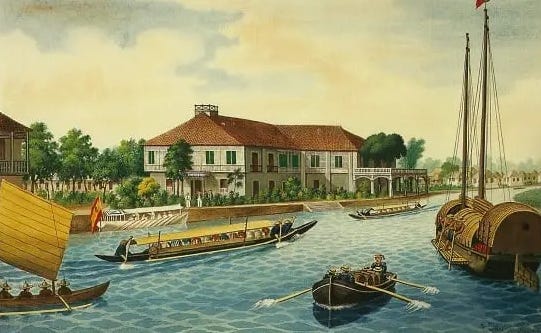
This was where the kingdoms of Tondo and Maynila were born from, with Tagalog kingdoms Tondo and Pulilan mentioned in the Golden Copperplace Inscription dating back to 900CE. It was during this era that Tagalog was written in the Baybayin script, an abugida that, like most Southeast Asian written languages, ultimately traces its origins to Brahmic scripts.
Baybayin was primarily used to write poetry and everyday expressions rather than formal legal documents, which is why most of the written Baybayin has been lost to time and the elements with a few notable pieces preserved in some of our national museums.
The Doctrina Cristiana and Spanish Era Documents
A 1593 document in the early Spanish period is among the first examples of written Tagalog and shows that Baybayin was adopted by early Spanish colonizers, albeit in an attempt to attract converts.
It was in the early Spanish period that Tagalog dictionaries were first written, with the “Arte y Reglas de la Lengua Tagala” written by Dominican friar Francisco Blancas de San Jose in 1610 documenting the language, and the 1613 Vocabulario de la Lengua Tagala by Franciscan priest Pedro de San Buenaventura in Laguna.
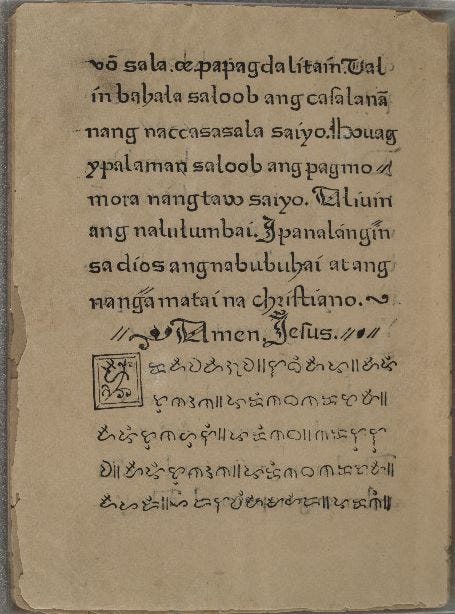
More missionaries compiled and edited Tagalog dictionaries over the years, one of them being a Czech Jesuit missionary Pablo Clain in the 18th century, who used Tagalog in much of his writings.
A Creation of a National Language
The Philippines was at an interesting point in its history in 1937. Two years prior, the country was given a new constitution which basically put the country under a transitional government that promised in 10 years the country would become fully independent.
This meant full sovereignty over their lands, which also included what would be the national language in which everyone was going to speak to each other in. There were a couple of ways they could go about this. They could just stick to English and Spanish and call it a day.
They could also follow Indonesia’s lead at the time and prop up the Riau dialect of Malay, a historical trade language, to national language status and re-brand it Bahasa Indonesia, given that trade Malay was historically used in pre-colonial societies all over the Malay Archipelago, with some rajahs and datus being reasonably versed in the language.
Instead, a couple of delegates from across the archipelago decided to gather in Manila and “create” a national language, one based on the many languages that were spoken among the thousands of islands. There needed to be one main language that was the basis of what was to be the “Wikang Filipino”.
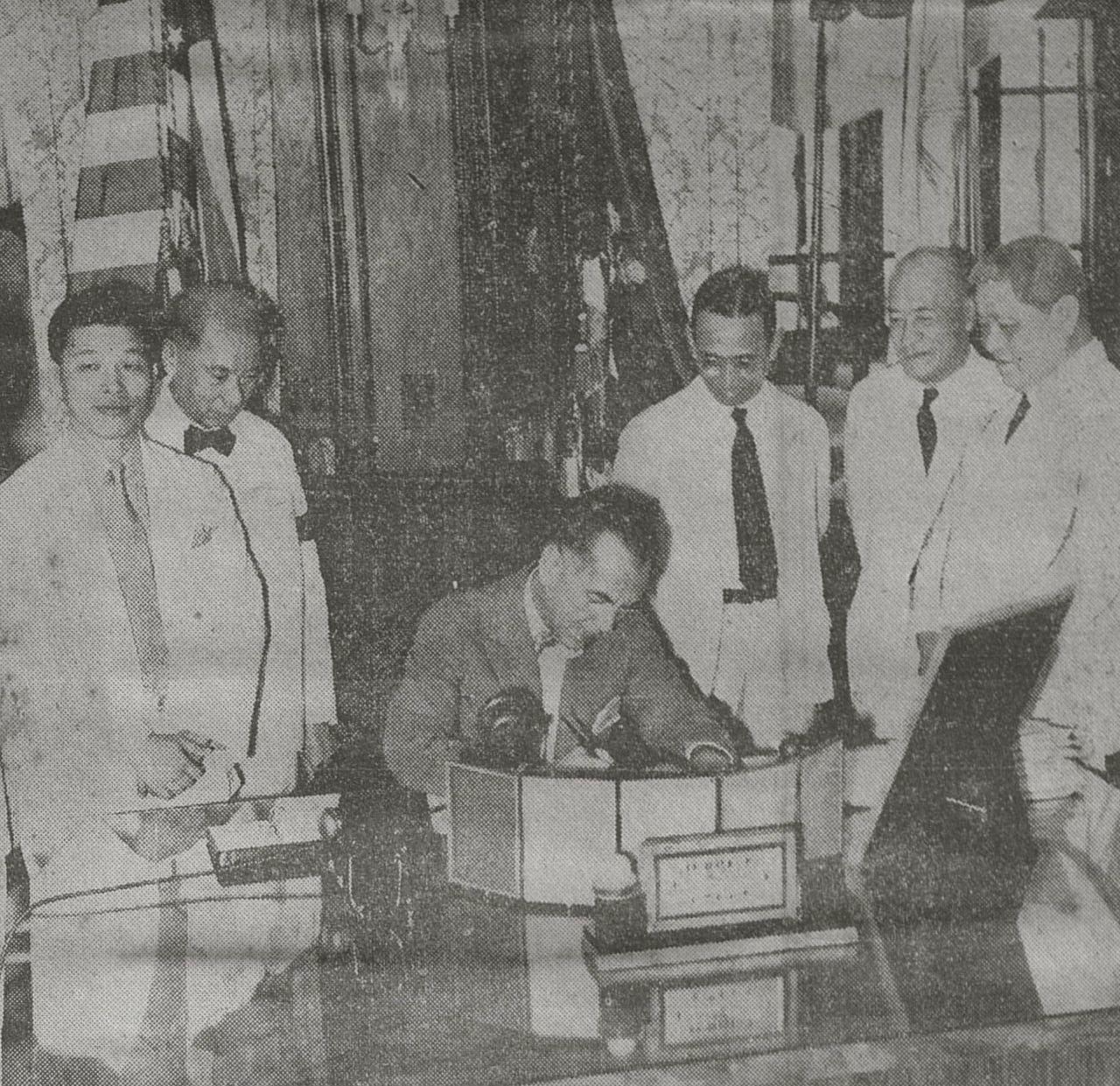
After a series of deliberations and multiple studies and surveys of each existing native language, the Institute of National Language designated Tagalog as the language to be the basis of the Filipino language. President Manuel Quezon issued an Executive Order approving the adoption of Tagalog as the national language of the Philippines.
Reasonings behind the decision to propagate Tagalog as the national language included its wide geographical range, it not being divided into smaller daughter languages like Visayan or Bikol, its extensive and well-developed literary tradition, and its location where it is spoken.
Manila is where Tagalog comes from and being the political and economic center of the country, to them it made sense that Tagalog should be the unifying language. It also helped that the Katipunan used Tagalog for its operations during the struggles for independence. The Philippine National Assembly passed the Commonwealth Act declaring that the Filipino national language would be considered an official language when the country was given full sovereignty.
The Filipino Language Since Then
Wikang Pilipino today is a lingua franca, and while there have been periods of pushbacks from other ethnic groups, it still reigns as one of the unifying languages that binds the collection of islands together.
The 1987 constitution once again designated Filipino alongside English as the official languages. The Komisyon sa Wikang Filipino was created to help develop, propagate, and preserve the national language as well as other regional languages.
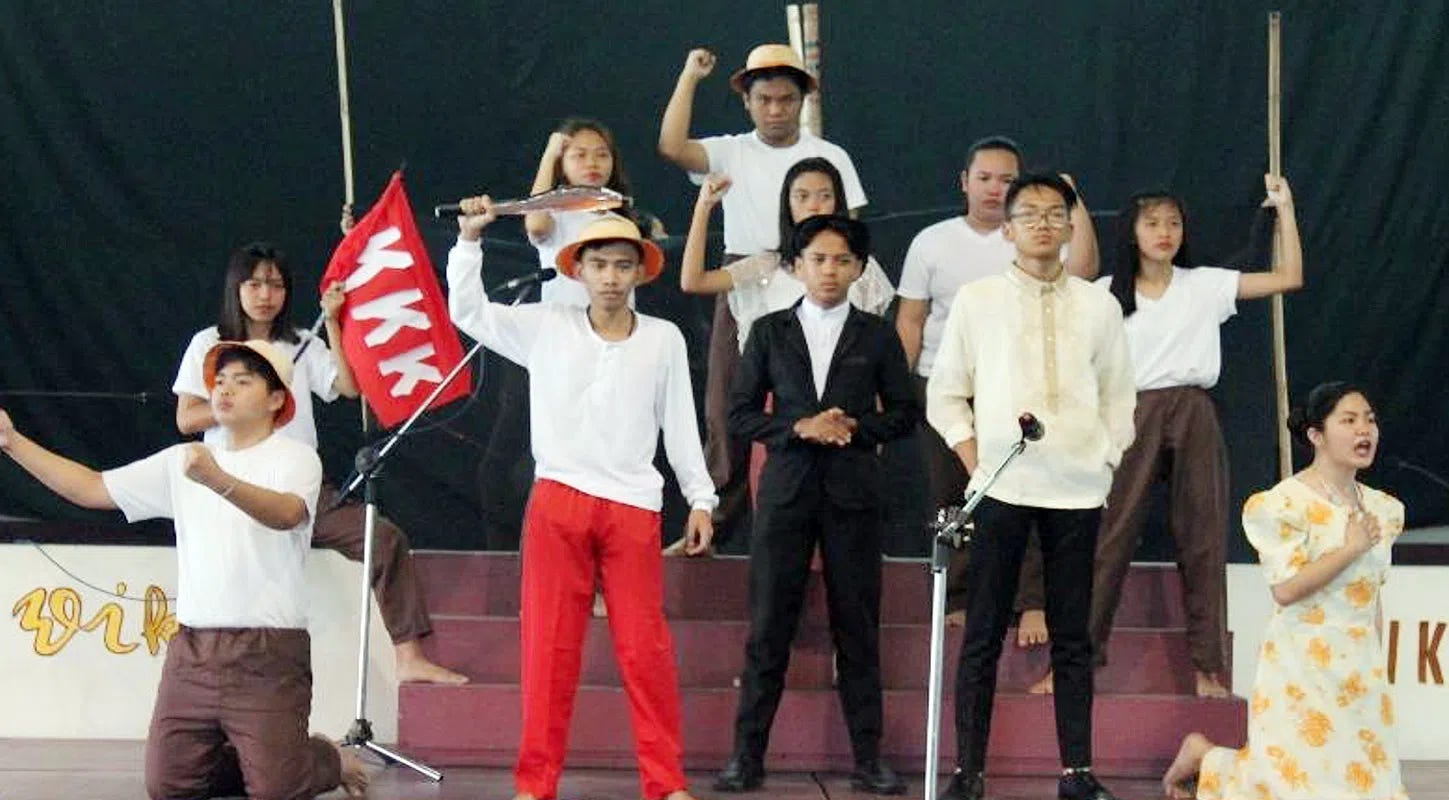
Buwan ng Wika is held during August as a way to celebrate Filipino language and culture. Throughout the whole month, local cultures and languages are promoted, encouraging their usage and promoting patriotism. Nationwide, schools host events to instill cultural values. The month-long event also encourages wearing traditional clothing and traditional songs and dance events.
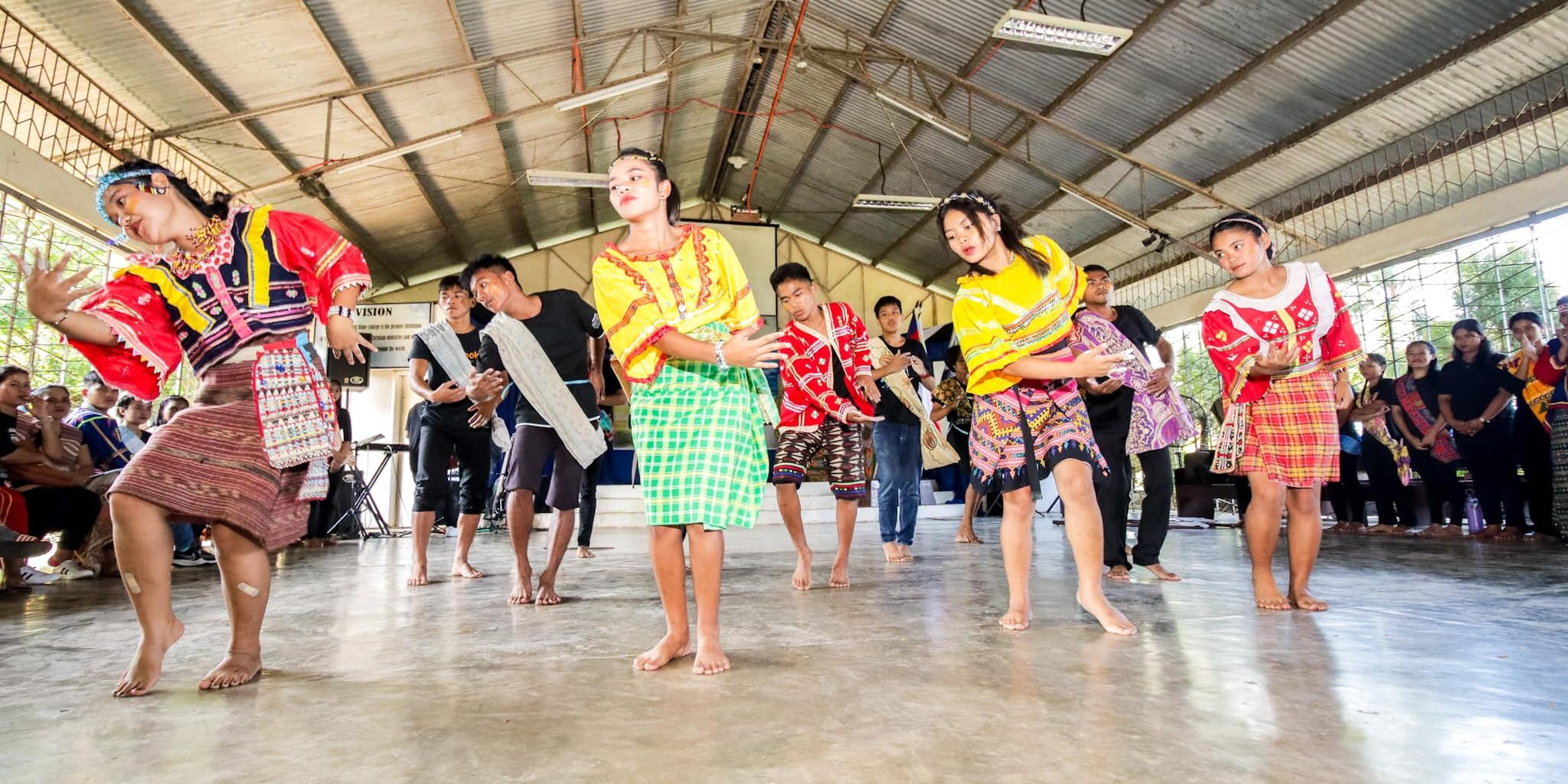
Today, Tagalog or Wikang Pilipino remains more than just a tool for communication. It is a bridge across islands, generations, and identities. While the Philippines is home to hundreds of languages, the Filipino language serves as a shared voice that allows a diverse nation to speak to itself and to the world.
In understanding Tagalog’s journey, from river settlements and Baybayin scripts to constitutional recognition, we come to understand not only the roots of our national language, but the evolving story of the Filipino people themselves.
Magandang umaga, bayan :)
https://open.substack.com/pub/krsnaj/p/237-sarkar-on-what-constitutes-a?r=1nrfb0&utm_medium=ios