


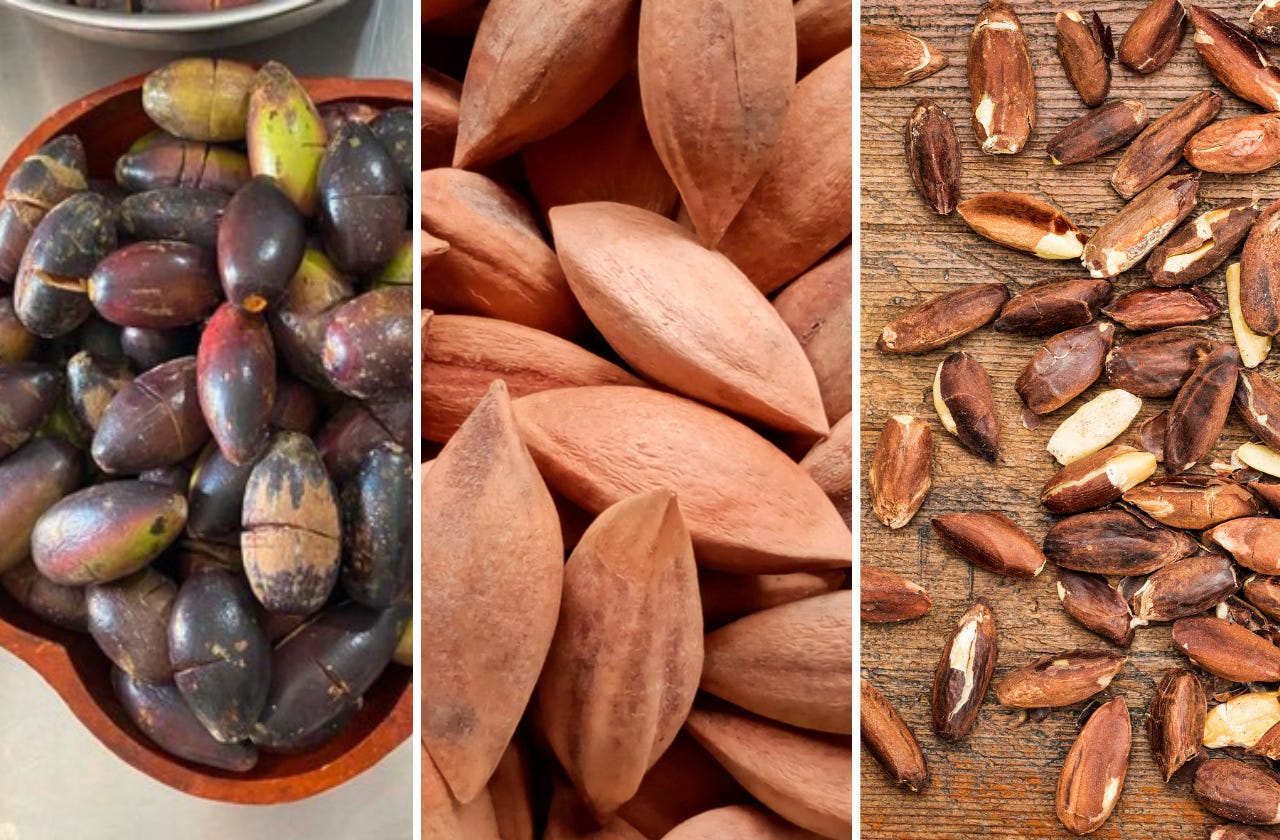
If you grew up in Bicol, you know that the day doesn’t start with an alarm clock. It begins with the sun creeping over the silhouette of a volcano—be it Mayon, Bulusan, or Isarog—and, on some days, if you listen closely, the rhythmic, metallic clack-clack-clack of a bolo knife striking stone. That is the sound of pagtilad, the distinct, skillful art of cracking the Pili nut.
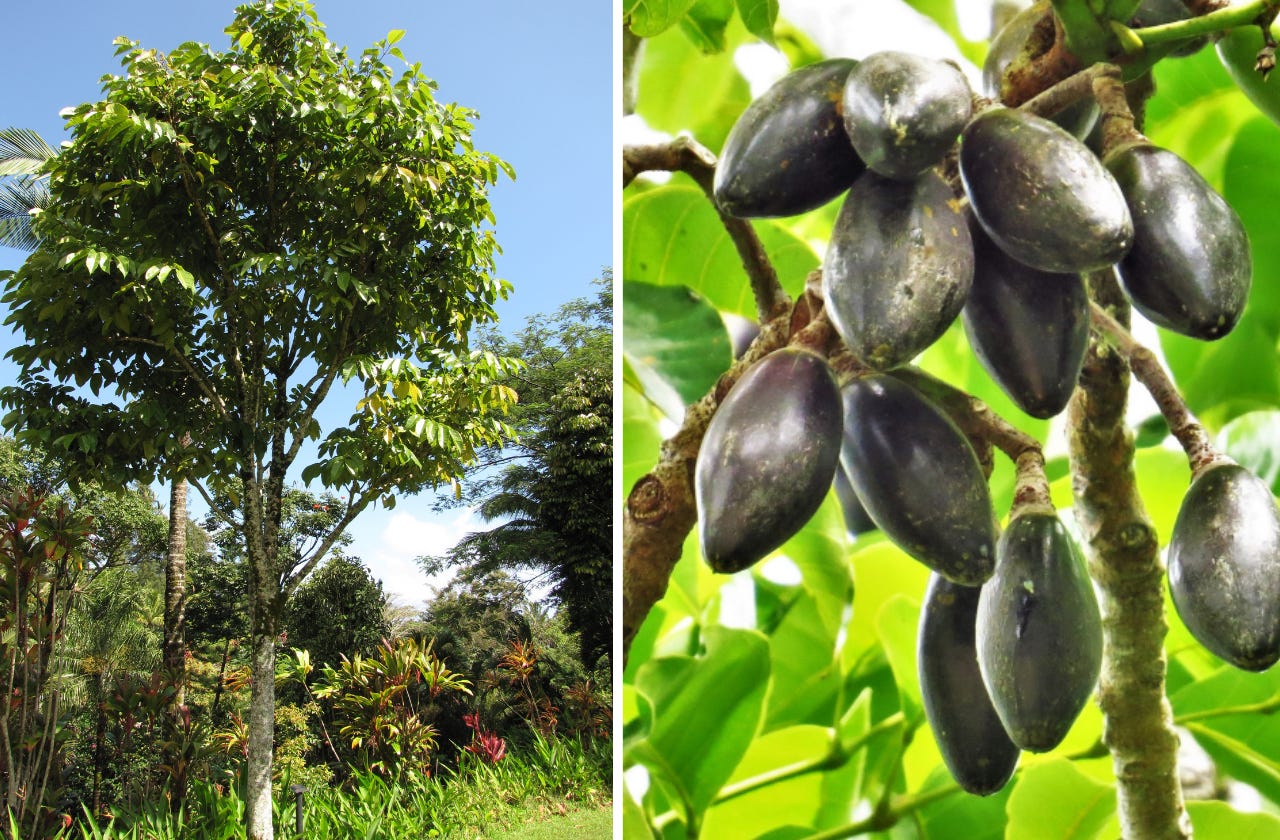
I grew up seeing the Pili tree (Canarium Ovatum) among other trees in backyards. The Pili tree stood like a proud guard, its massive, buttressed roots were part of our playground, and its canopy provided respite from the sun.
Beyond our personal experience with the Pili tree, we are proud of its produce, the “Queen of Nuts,” a delicacy that has defined our culinary heritage, sustained our economy, and charmed the palate of the world.
The Art of Cracking the Nuts
To understand the Bicolano, you must understand the Pili, and that understanding begins with the sheer difficulty of reaching the prize inside. The pili nut is not just a snack in a jar. It is the product of both patience and precision. The Pili shell is notoriously tougher than a walnut, more stubborn than a pecan.
Your run-of-the-mill nutcracker cannot crack it; it would break first before the shell could be broken. This is where the skill of the paratilad or the sheller is most needed. I remember watching my father sit on a low wooden stool, a sack of black, dried nuts beside him.
He would place a nut on a flat stone and, with a terrifyingly sharp bolo, strike it with exact force… if the blow was too soft, the shell remained shut; if the blow was too hard, the creamy nut inside was crushed.
If one wants to make high-grade sweet pili nuts, the creamy kernel inside the shell must be extracted whole. So, it is akin to a dance of danger and delicateness, a skill passed down through generations.
From Backyard Tree to Kitchen Table
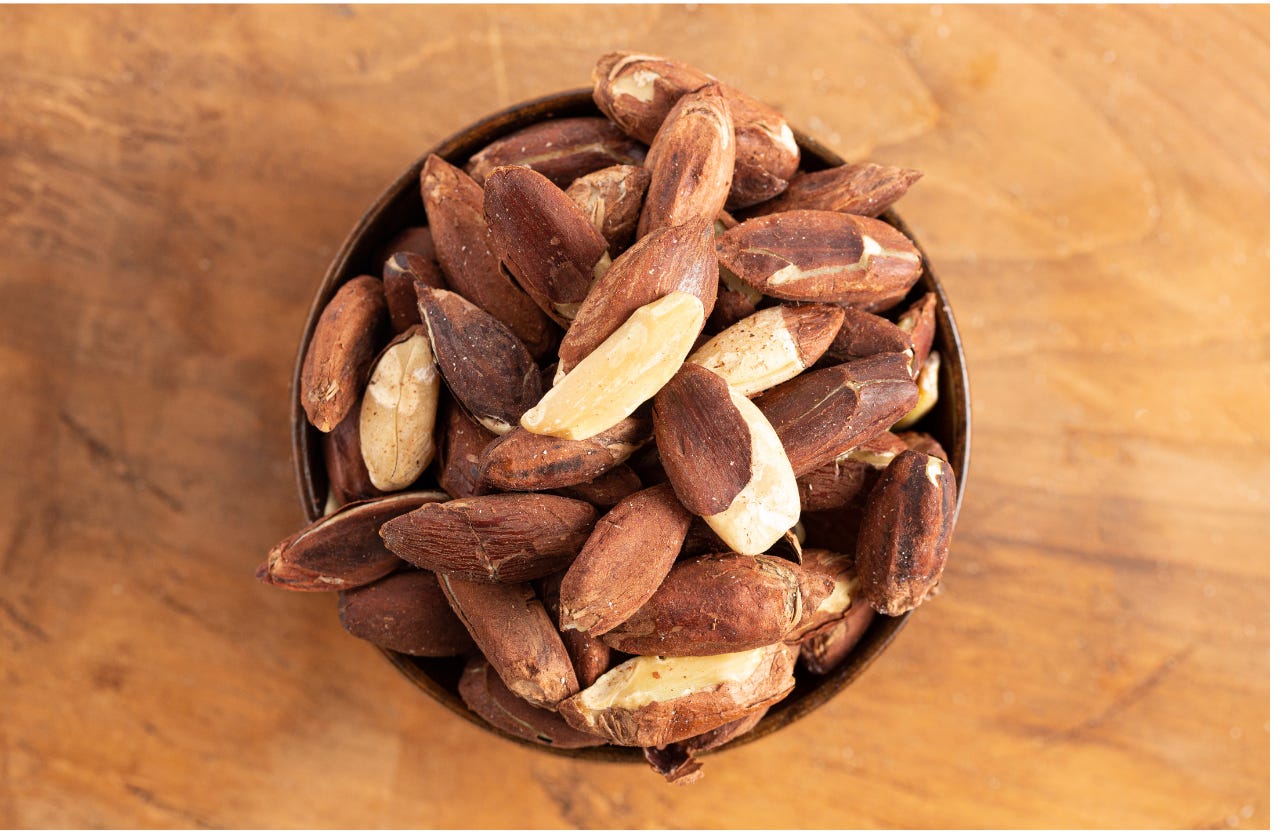
That kernel, once freed, is a revelation. It is high in healthy fats, boasting a texture that is uniquely creamy, almost buttery when raw, and impeccably crisp when roasted.
What sets the Pili apart from its similar substitutes, like the almond or the macadamia, is its distinct texture and its rich, earthy, silky-butter taste, like the robust, volcanic soil it grows in.
While the world knows the Pili nut primarily as a glaze-covered confection, growing up in Bicol meant knowing it at every stage. As children, we did not just eat the kernel; we also enjoyed the pulp. You see, before the nut reveals its hard shell, it is covered in a thick, purple, black skin and a fibrous pulp. This must be boiled at just the right temperature, or it goes to waste.
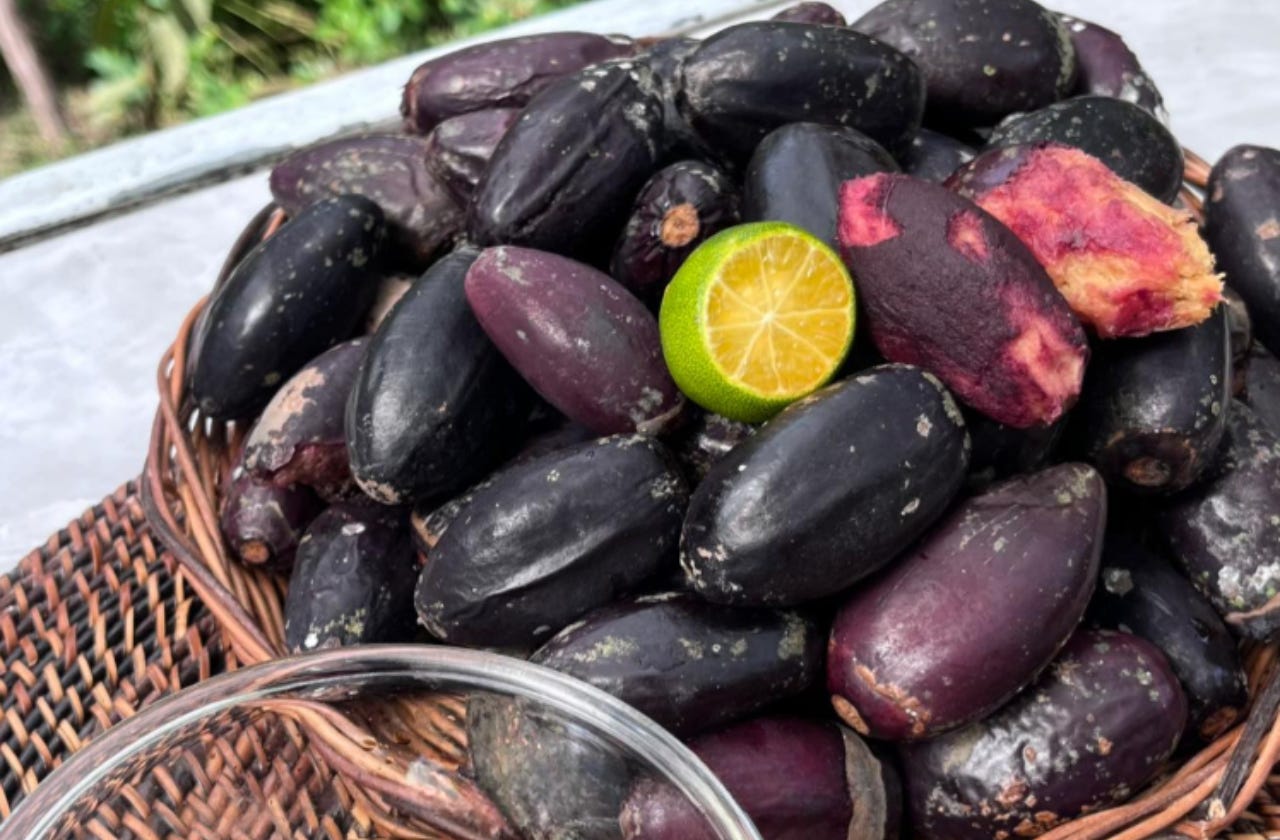
My grandmother used to put her hand in the pot while it boiled, just until she could no longer take the heat. And when you get it right, the pulp becomes a savory snack with a texture similar to that of sweet potato or avocado. You season it with a dash of fish sauce (patis), dip it in chili-mansi, or roll it in plain sugar. We usually savored it for our afternoon merienda, staining our fingers purple!
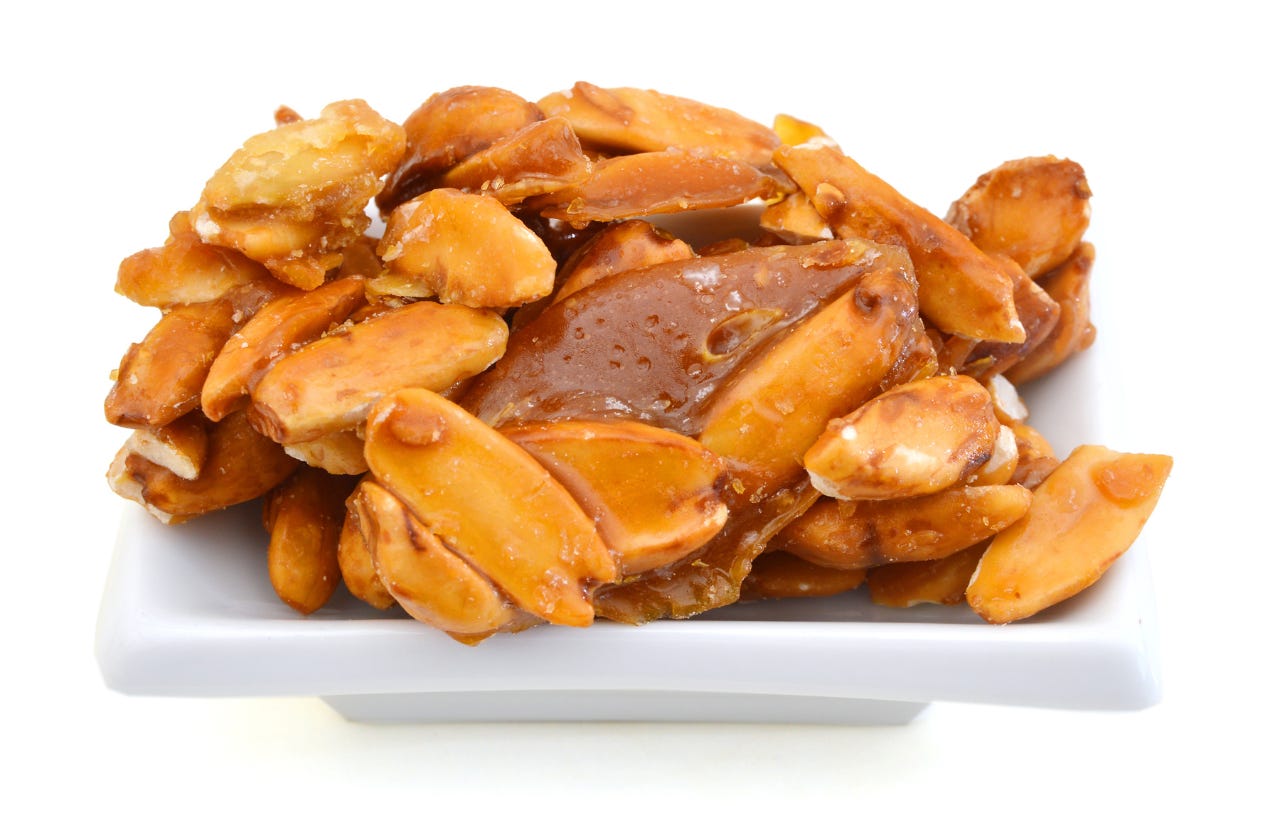
But, of course, the sweets are the stars that draw the crowds. Walls of jars filled with pili nut greet every tourist walking into pasalubong centers across the Bicol Region. There is the classic Pili tart, a boat of crumbly pastry carrying the caramelized nut, or the Mazapan de Pili, a soft, milk-infused bar that melts on the tongue.
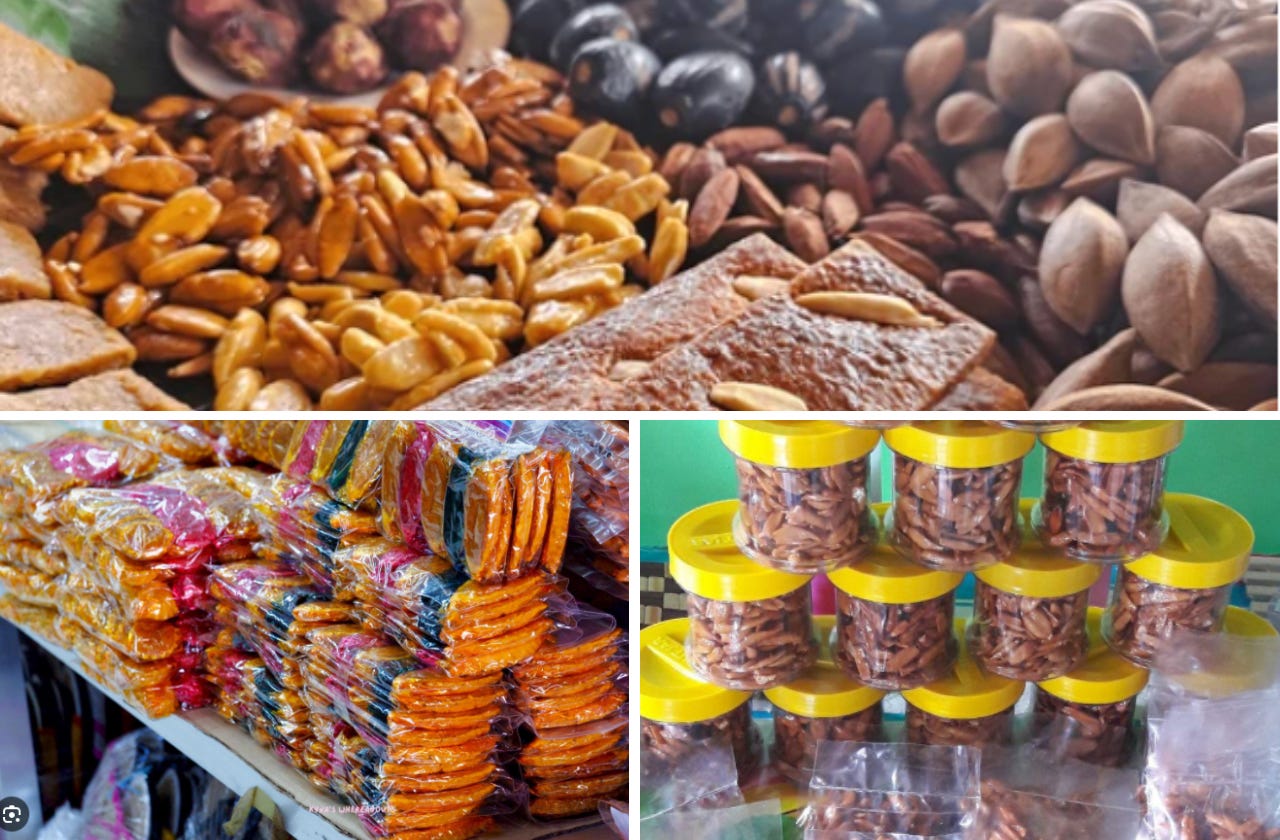
There is also the sugar-coated variant, the salty-garlic roast, and the modern chili-honey infusion that pays homage to our region’s love for spice. Over time, the Pili has even found its way into our savory dishes.
In modern Bicolano fusion cuisine, you will find crushed Pili to thicken and give texture to sauces, Pili-crusted tilapia, and pesto made not with pine nuts, but with our beloved local treasure. It is a testament to the nut’s versatility. It is as comfortable in a five-star restaurant as it is in a sari-sari store.
Global Demand
This culinary versatility has propelled the Pili into becoming our “Black Gold,” one of the few crops almost exclusive to the Philippines, with Bicol being the undisputed center of production. For decades, it was a backyard industry where families would harvest what they could, process it in their kitchens, and sell it at the local market. Today, the industry has transformed.
Now we see demand for Pili nuts across the oceans, as health enthusiasts in Europe and North America have discovered their high Vitamin E and magnesium content, labeling them a “superfood.” This global attention has helped invigorate our local economy.
The Spirit of Oragon
For Bicolano farmers, the Pili tree is an insurance policy. Unlike coconut trees that can snap like matchsticks during our frequent typhoons, the Pili tree is resilient. It is known as a “storm survivor.” When the fierce winds of the Pacific batter our region, the Pili tree may lose its leaves, but it rarely falls. It stands on its ground, sheds its foliage to reduce wind drag, and waits for the sun to return.
This resilience helps restore economic stability for the region. When rice crops fail or coconut prices drop, the Pili remains. The export market has raised the value of the nut, helping farmers send their children to school and upgrade their homes. It is a crop that gives back to the people who care for it, embodying the very spirit of the Bicolano people: Oragon.
This Bicolano word is hard to translate directly and will need its own article to be understood but for now, it means strong, feisty, impressive, and enduring. Like the Pili shell, we are tough on the outside, hardened by the storms that frequently visit our shores. We are difficult to crack. But once you get past that tough exterior, you find a richness and warmth that is unparalleled.
For the tourist, buying a jar of Pili nuts is the ultimate pasalubong, a proof of travel to bring back to their hometowns. But I like to think that when visitors buy Pili, they are not just purchasing a snack; they are taking with them a testimony of our spirit.
When you visit Bicol, you will see Pili nuts everywhere. You will see them in the grand malls, bus terminals, or in plastic packets sold by vendors who hop on the bus before it departs. You will see them drying on mats by the roadside in rural barangays. They are a constant reminder of who we are. We are people of the volcano and the typhoon, but also people of the rich earth and the sweet harvest.
Next time you open a bag of Pili nuts, take a moment. Hold the teardrop-shaped kernel and imagine the bolo striking the stone. Hear the wind rustling through the canopy of a century-old tree in Albay or Camarines Sur. Taste the creaminess that no other nut can offer. You are not just eating superfood; you are tasting the resilience, the culture, and the heart of the Bicolano people.