


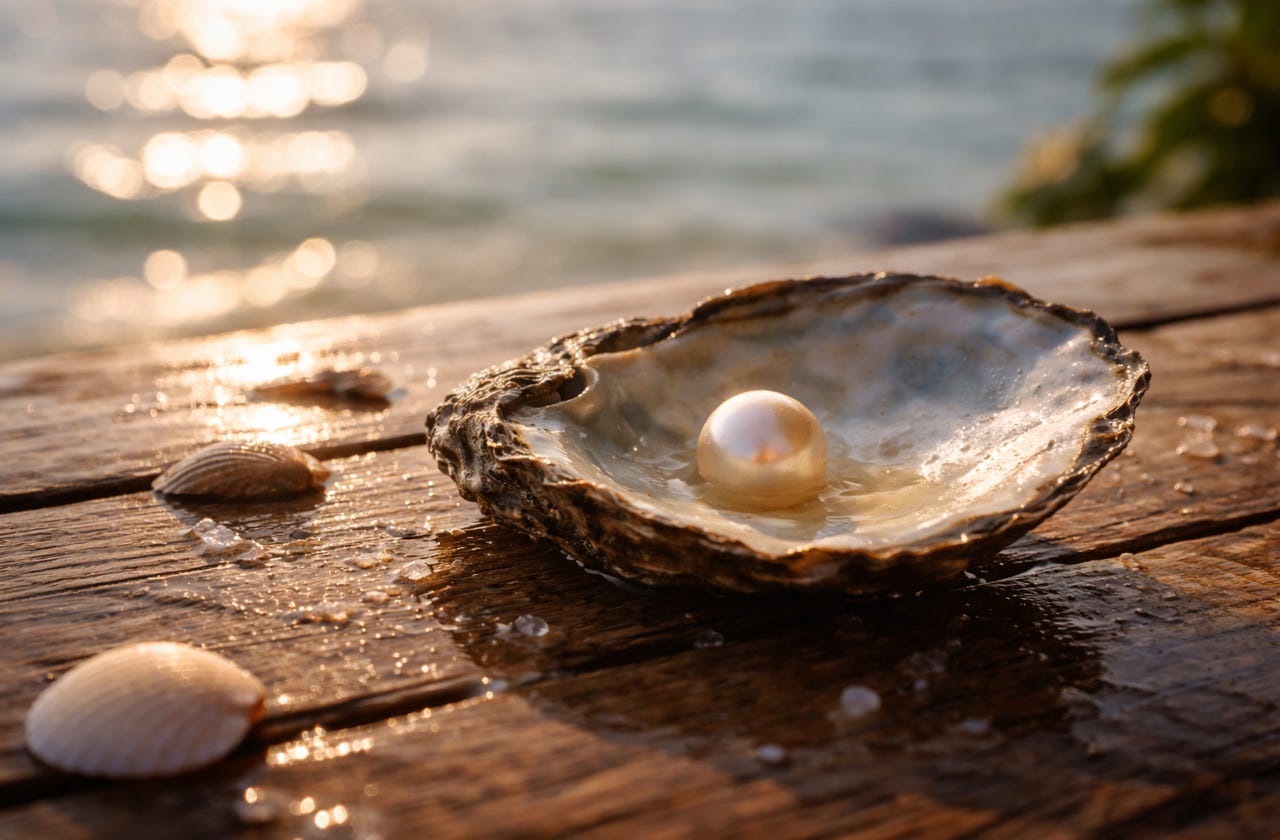
In the Philippines, the most valuable things are rarely rushed.
Good food takes time. Meaningful conversations drift. Relationships are nurtured. And in that same quiet, deliberate way, so are South Sea pearls.
A recent December trip with friends to Puerto Princesa gave me the chance to rediscover the beauty and allure of South Sea pearls – a true Palawan treasure. Browsing multiple small shops, listening to stories behind the pieces, and lingering longer than planned became a quiet highlight of the trip.
The Philippine South Sea pearls are widely considered the largest and most luxurious pearls in the world. That part is true. What’s less often discussed is why pearls grown in Philippine waters, are sought after by jewelers and collectors alike.
It’s no coincidence that the South Sea Pearl was declared as the Philippine National Gem in 1996, a fitting tribute to the country’s title “Pearl of the Orient Seas”. The oyster and pearl are also depicted on the reverse side of the country’s 1,000-peso bills.
Born in Palawan’s Waters
Most pearl farming in the Philippines happens around Palawan, an island known for its clear, nutrient-rich waters and carefully protected marine ecosystems. The Palawan waters are clean enough to support healthy oysters, yet rich enough to allow pearls to develop slowly and naturally. These provide ideal conditions for cultivating South Sea pearls.
Palawan is a region that puts premium on careful development, where speed might not always mean efficient. That philosophy extends to pearl farming, where growth is allowed to happen at its own deliberate pace.
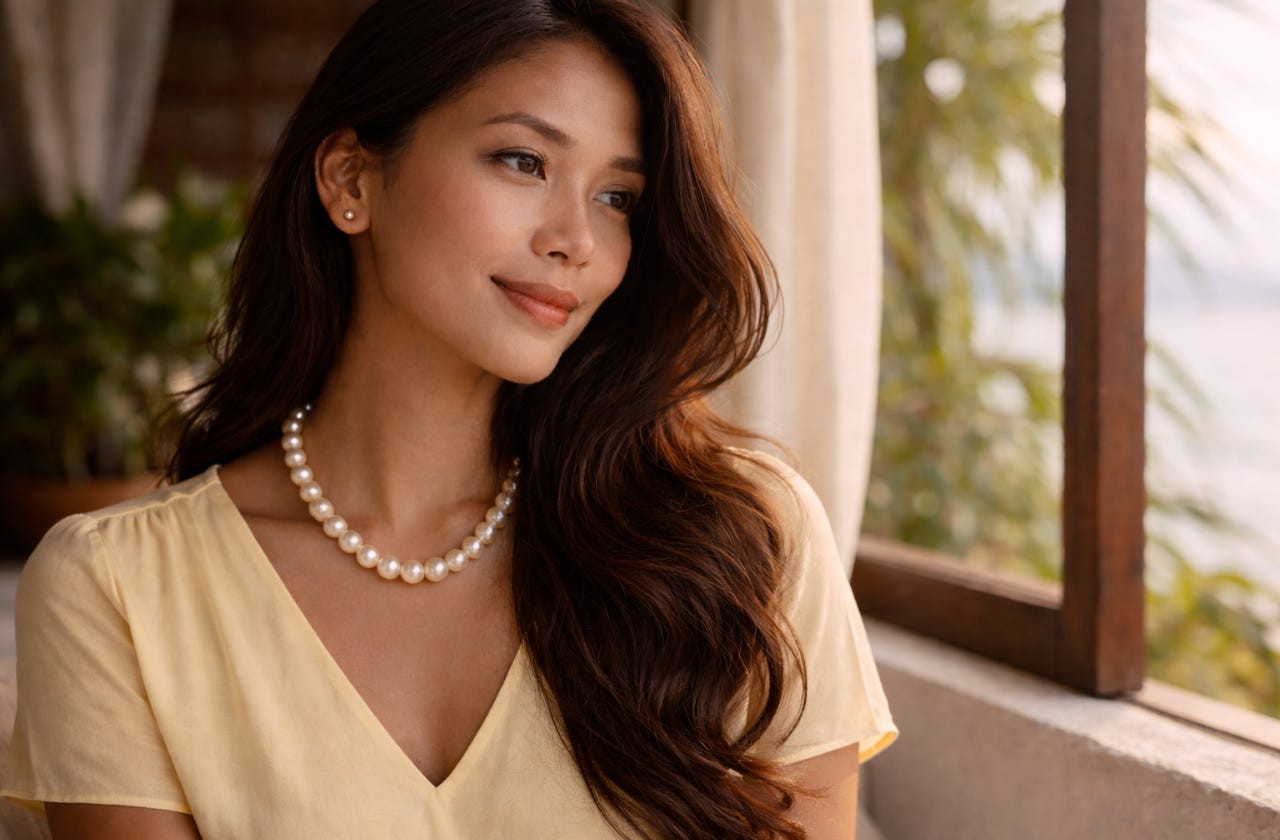
Among South Sea pearls, one variety stands apart: the golden pearl.
These rare pearls come from the gold-lipped Pinctada maxima oyster, a species found only in select parts of the world, and most famously in Palawan. It is the only oyster capable of producing true golden South Sea pearls - prized for their warm, luminous tones that range from soft champagne to deep, sunlit gold.
This isn’t a color applied or enhanced after the fact. It’s something the pearl becomes on its own, shaped by the oyster and the sea over several patient years.
Today, the world’s leading producer of golden South Sea pearls is Jewelmer, a Philippine company that operates pearl farms throughout the Palawan archipelago.
Slow, Big, But Not Loud
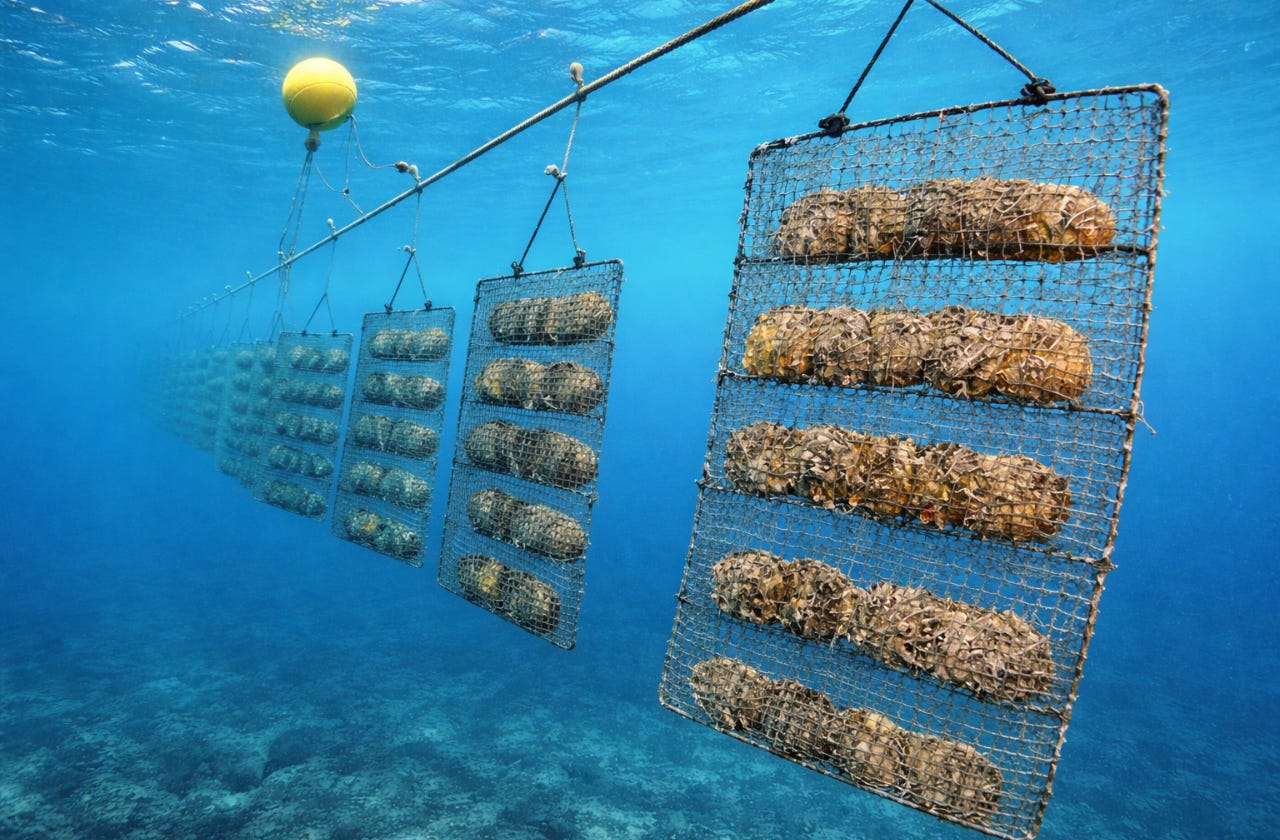
A Philippine South Sea pearl often takes several years before it’s ready - typically two to five years. Farmers don’t rush the oysters, and they don’t force growth to meet demand.
The result is a pearl with, to quote Google, “thick nacre and real depth”, the kind that doesn’t just shine under direct light but carries a soft glow even in the shadow.
They say you can usually tell when a pearl has been hurried: it looks flat, may appear too perfect, almost mimicking plastic.
The Philippine South Sea pearls are known to look different: slightly irregular, warmer, alive.
They also age beautifully, which is why they’re often treated as heirlooms rather than seasonal accessories.
South Sea pearls are large, and some are impressively so. But what sets Philippine pearls apart is that they don’t feel oversized for attention’s sake.
It’s often said that a large pearl without luster is simply big while a large pearl with depth feels right. Philippine South Sea pearls usually fall into the second category.
Collectors value Philippine South Sea pearls for their natural palette - soft whites, silvers, gentle champagnes, and golds that don’t look painted on.
Their color comes from warm waters, healthy oysters, and time. What you see is what the pearl became on its own.
In a world where luxury is often engineered to look expensive, that kind of raw honesty stands out.
Small Scale by Choice
Outside of a few major producers, pearl farming in the Philippines is still largely family-run and small-scale. Many growers have worked the same waters for generations. The goal isn’t volume but quality.
That means fewer pearls make it to the market. It also means standards stay high.
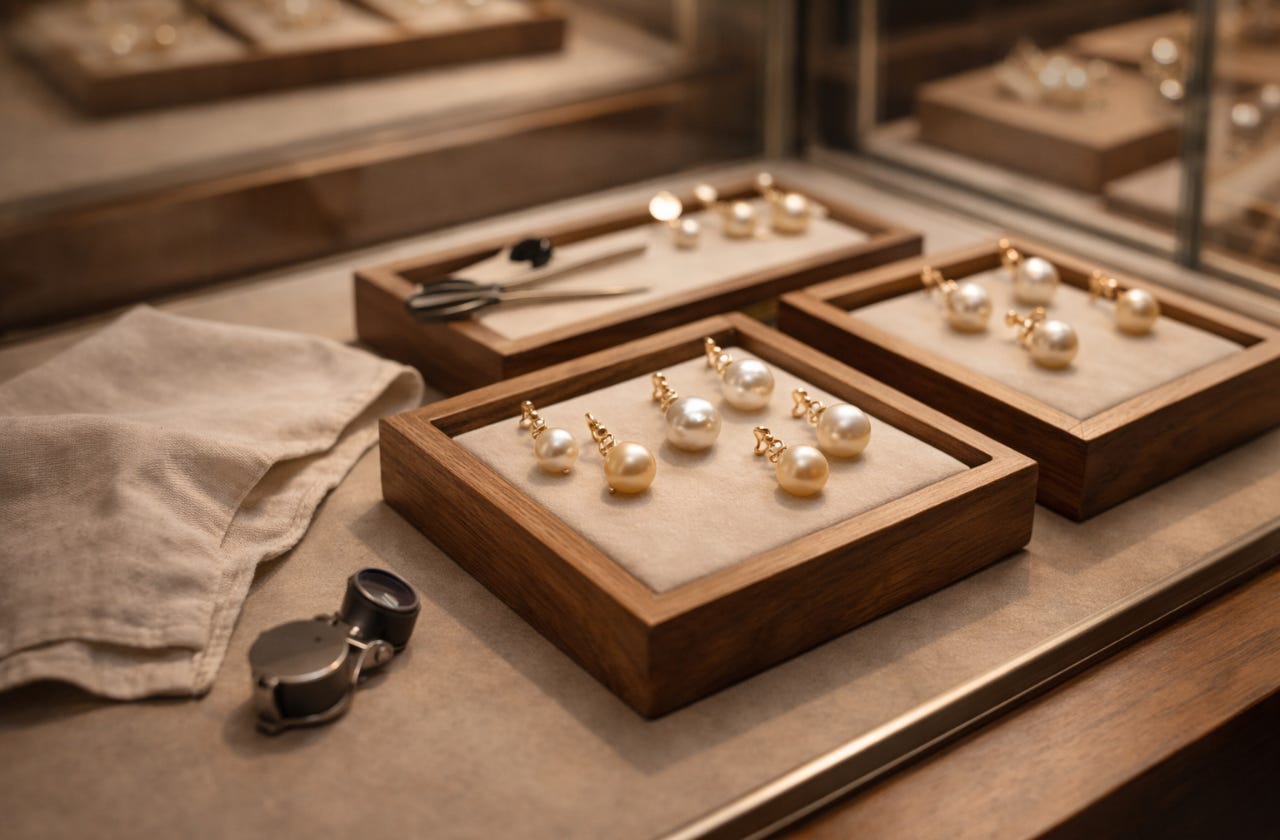
Jewelers and collectors alike know this which is why Philippine South Sea pearls are often spoken about quietly, almost reverently, rather than aggressively marketed.
Palawan’s relationship with pearls goes back long before modern farming.
This island is home to some of the largest natural pearls ever discovered, including the 75-pound Pearl of Puerto Princesa and the 14-pound Pearl of Lao Tzu (also known as the Pearl of Allah).
These aren’t cultivated gems, and their discovery reinforces Palawan’s long-standing place in pearl history and its deep connection to the sea.
Why They’re Truly Coveted
So, are Philippine South Sea pearls among the most coveted gems in the world?
Among those who understand pearls, yes. They are firmly among the top tier. Some may even claim that they sit at the top, with the rare golden variety referred to as the “queen of cultured pearls”.
Not because they’re trendy. Not because they’re everywhere.
It’s because they represent something increasingly rare: patience, restraint, and craftsmanship that respects the process.
They aren’t designed to impress quickly. They’re designed to last.
And like many of the best things that come out of the Philippines, their value isn’t always obvious at first glance. But once you understand them, you start seeing them differently.
Thank you very much for the wonderful article.
"Mabuhay ang Pilipinas!"
"Perlas ng Silangan!" https://tinyurl.com/perlas-1
God bless the Philippines!
Pearl of the Orient!