


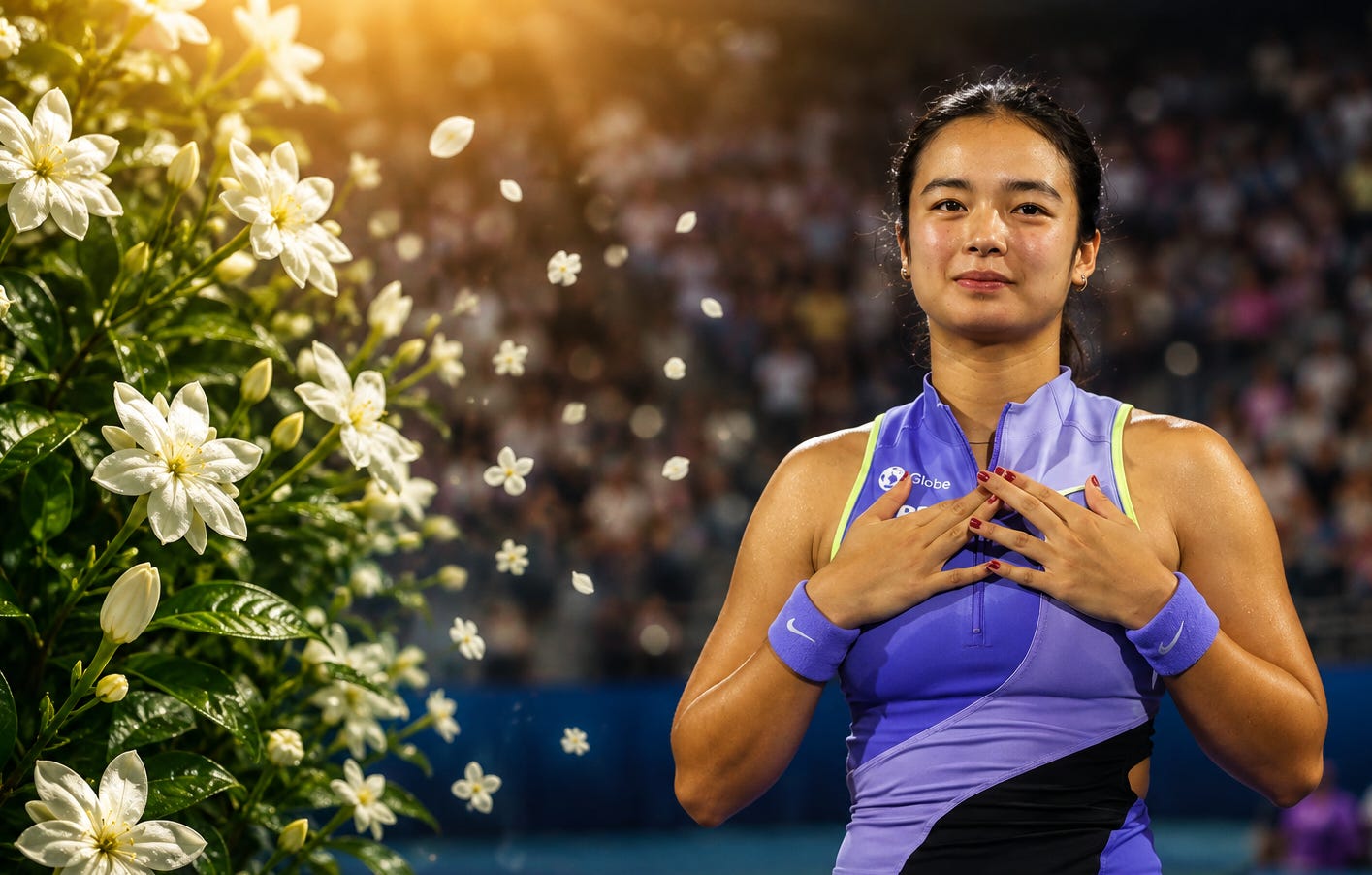
You’ll probably catch it before you see it.
That faint, sweet smell drifting from a vendor’s basket, or a garland hanging quietly by a church door, somewhere in a Filipino neighborhood at dusk. It’s sampaguita, and for most Filipinos, that scent isn’t just a flower. It’s home.
This small, white and unassuming flower has been the Philippines’ national flower since 1934. It doesn’t demand attention the way a rose or an orchid might. It simply blooms, fills the air with something unmistakably fragrant, and somehow ends up more memorable than the flowers that try harder.
A Flower Woven into Daily Life
You see it everywhere once you start noticing. Vendors selling leis at street corners, church entrances and stoplights, tapping on car windows with a soft “Sampaguita po?” Devotees drape them over the Santo Niño or the Black Nazarene as offerings. Grandmothers tuck a few stems behind a photo frame of a loved one who has passed.
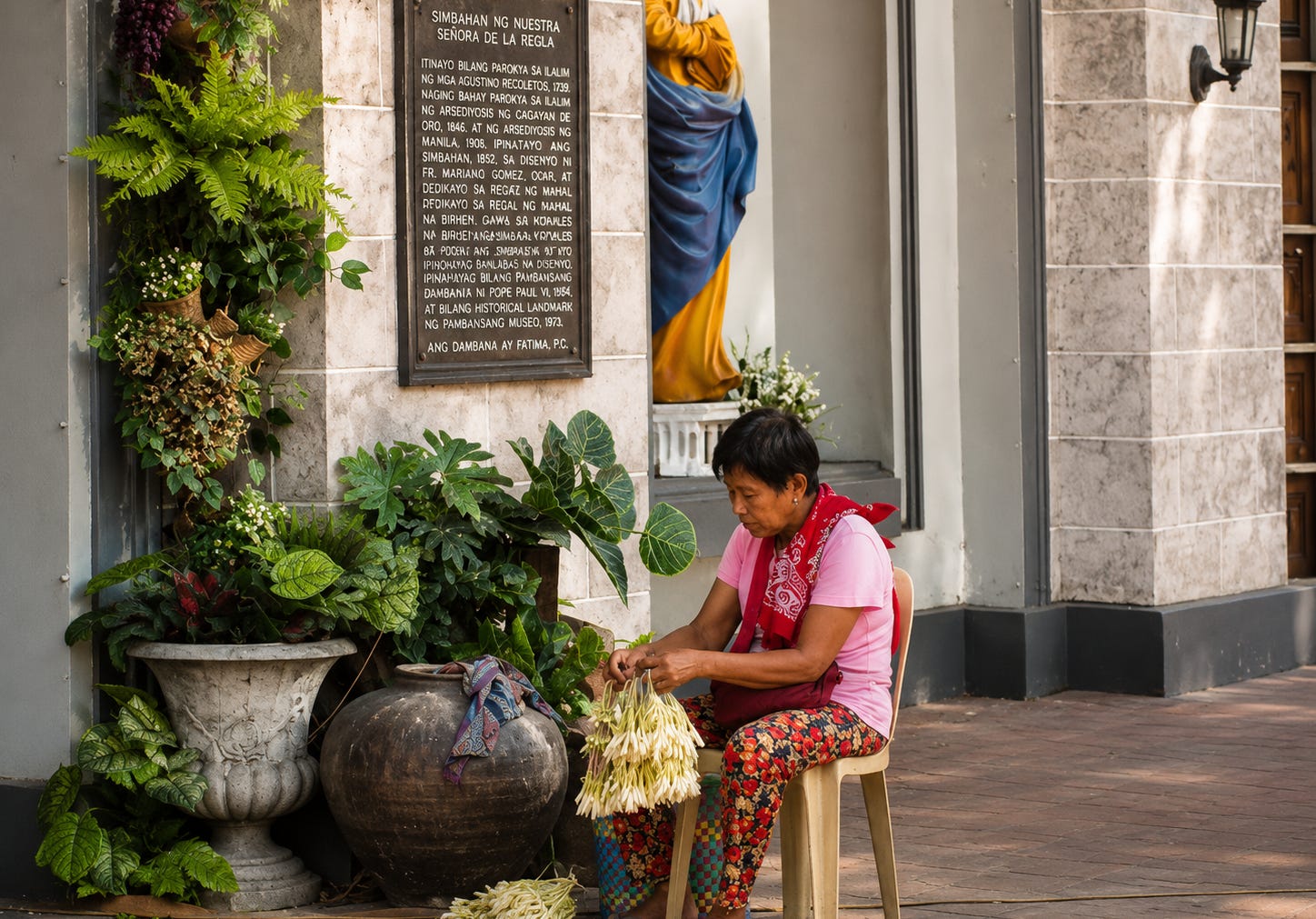
There’s a quiet symbolism behind all of it. Sampaguita has long stood for purity, simplicity, and devotion—values that run deep in Filipino culture. It’s not a flower that asks to be admired from a vase on a table. It shows up in prayer, grief, celebration, aspiration and love, often without anyone noticing how present it is.
From Garlands to Grand Slams
In the last couple of years, sampaguita has picked up a meaning that has nothing to do with garlands or grandmothers. It’s become the shorthand for a young Filipina playing tennis, competing thousands of miles from home.
Alex Eala didn’t grow up performing rituals with the flower. But somewhere along her rise, from a junior player training at Rafa Nadal’s academy in Spain to a genuine threat on the WTA tour, Filipinos started reaching for sampaguita to describe her. Nobody asked for the comparison. It just fit.
There’s a certain quiet fierceness to how she carries herself. No trash talk, no manufactured drama for the cameras. She just shows up, court after court, and lets her game speak. Win or lose, she plays with the same composure, never seeming to forget where she comes from or whom she represents.
A New Kind of Filipina Strength
For generations, sampaguita has been tied to a certain image of the ideal Filipina: demure, soft-spoken, self-sacrificing. It’s an old archetype, and not one every Filipina has ever fit into. But Eala has quietly stretched what the symbol can hold.
She trains alone in a foreign country and competes against players with twice her experience. She’s proof that gentle and unbreakable were never opposites. You can carry the softness of sampaguita and still swing hard enough to beat a top-tenner on center court.
She also comes from a country better known for boxing champions and basketball obsessives than tennis players, and she’s carved out her own lane anyway. Maybe that’s why sampaguita, the flower that’s long embodied the Filipino spirit, fits her so well.
Eala just wears it a little differently.
Still graceful, but with an edge of pure determination. Still humble, but ambitious enough to go toe-to-toe with the best players in the world and not blink. A flower that’s always stood for the country’s heart, now standing in for its fight, too.
Three Days at the US Open
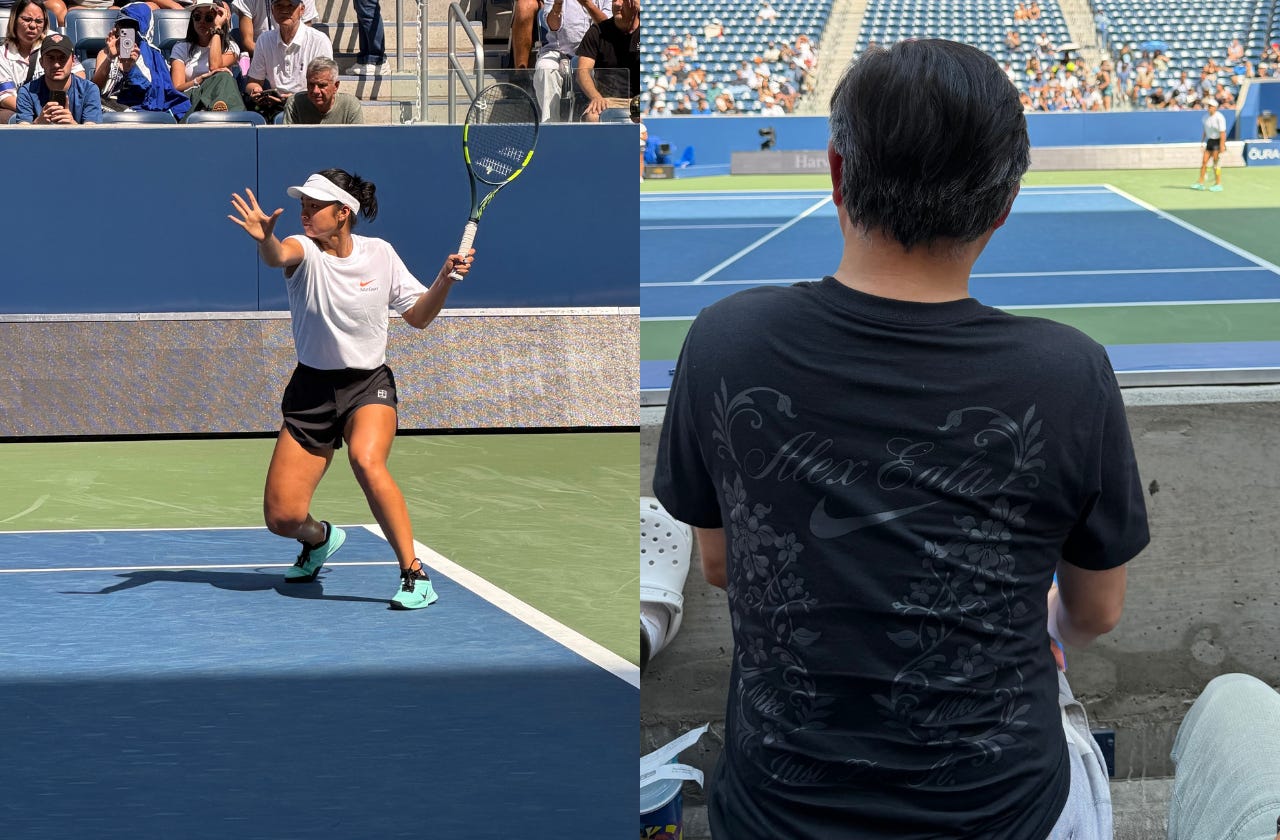
That’s the version of the story I knew going in. Then, last week, my wife and I, along with some friends, drove from Boston to New York for Fan Week at the US Open and got to watch a little of that fight up close.
We caught Alex at the Stars of the Open exhibition game and later got to watch her practice from just a few feet away. Watching her play wasn’t even the part that stuck with me most. It was watching all the Filipinos who’d come out for her.
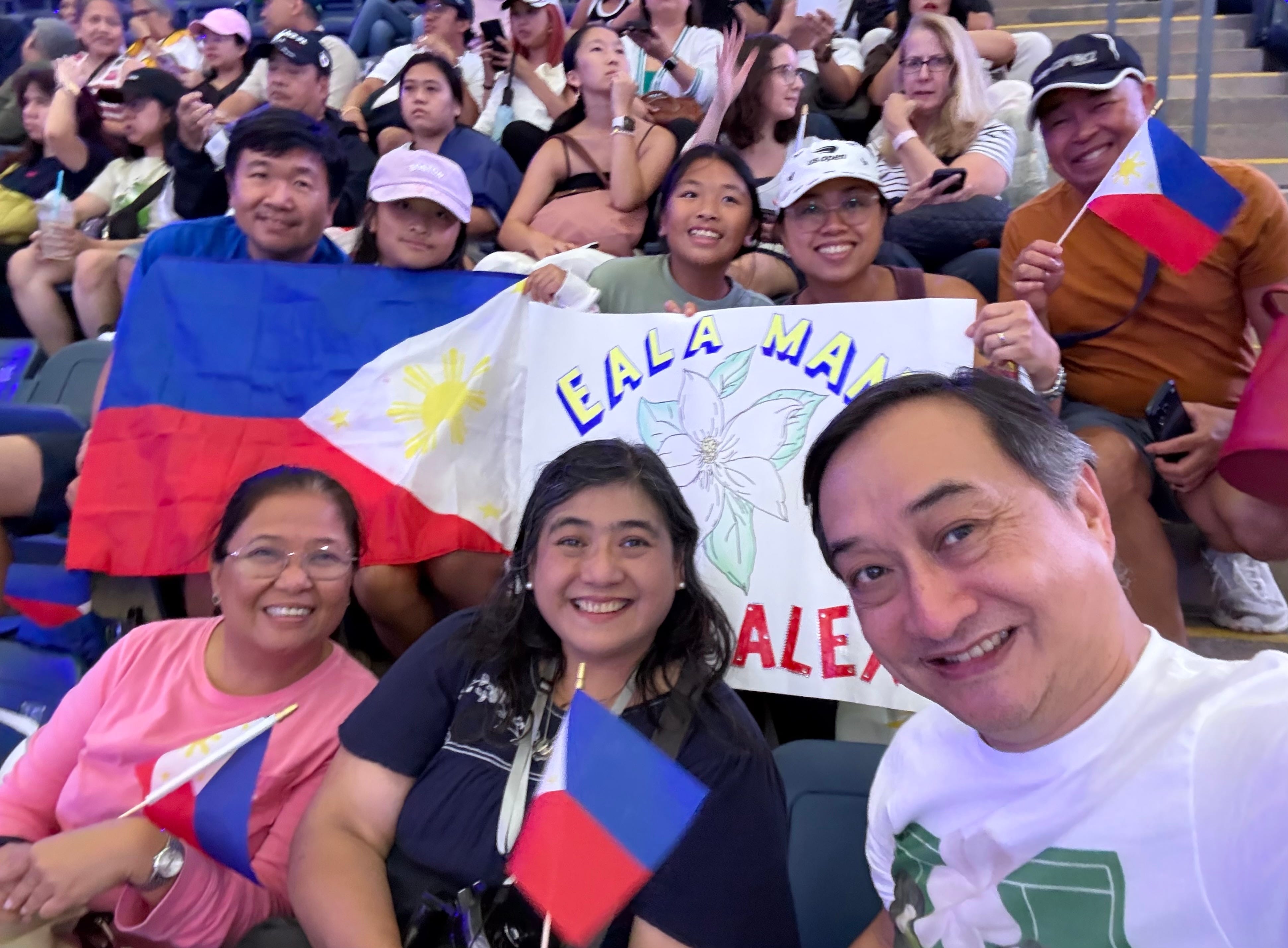
There’s a specific feeling that happens when you’re standing in a crowd of strangers who all, for one reason or another, decided to go to Flushing Meadows for the same person.
People taking photos, comparing notes on where they’d traveled from, just glad to be near someone who meant something to them. Thousands of miles from the Philippines, and it felt like a small barangay had assembled itself out of nowhere. I was hearing Tagalog left and right. And it was great!
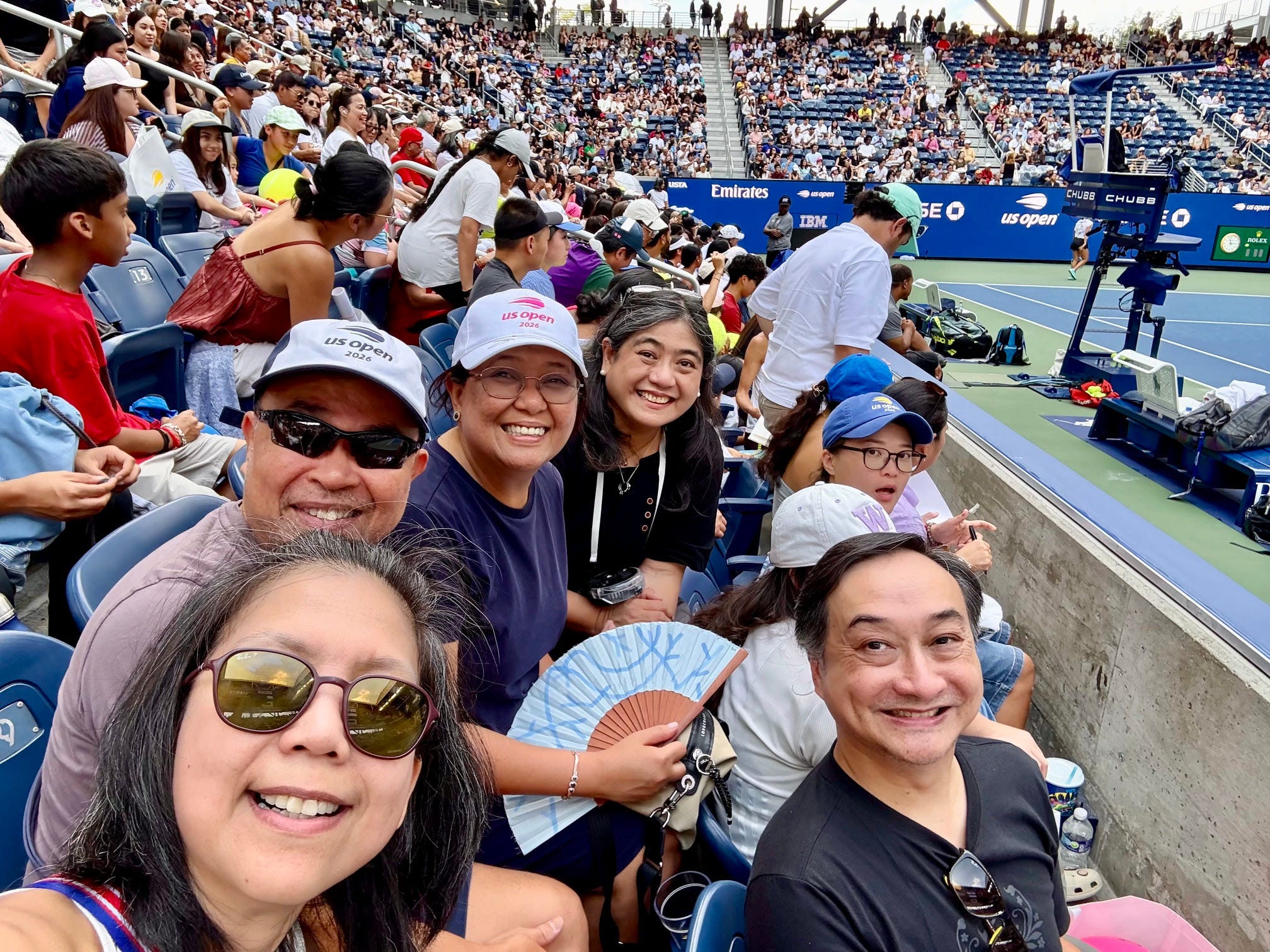
Afterward, Alex stayed and signed whatever fans held out, including caps and tennis balls for a few of us. She thanked people, in no rush, like their being there mattered to her as much as it clearly mattered to them.
That’s when the sampaguita comparison stopped feeling like a clever nickname sportswriters came up with, and started feeling like something you could actually see happening in real time.
What It’s Really About
I think the real reason Eala has caught on with Filipinos the way she has is not the ranking, or the milestones, or even the flag she represents. It’s that she’s carried all of it without losing the part of her that stops to sign a cap and say thank you.
For overseas Filipinos especially, that connection lands a little differently. For a few days in New York, geography barely mattered. People who’d built entirely separate lives, in entirely different cities, found themselves standing shoulder to shoulder, cheering for the same person.


Alex begins her US Open campaign later tonight in New York, Wednesday morning in the Philippines. There will be a lot of kababayans watching, cheering for the best outcome, from the stands in Queens to living rooms back home. Wherever we’re watching from, here’s rooting for her to go the distance.
So the next time that sampaguita scent drifts through a Manila evening, think of her too. Small, unassuming, quietly persistent, apparently capable of blooming just about anywhere.
The fragrance that lasts.
Let's go, Team AE! If you're coming back from more Eala matches, let me know. I'd love to hang out with you all and cheer for our tennis star!