


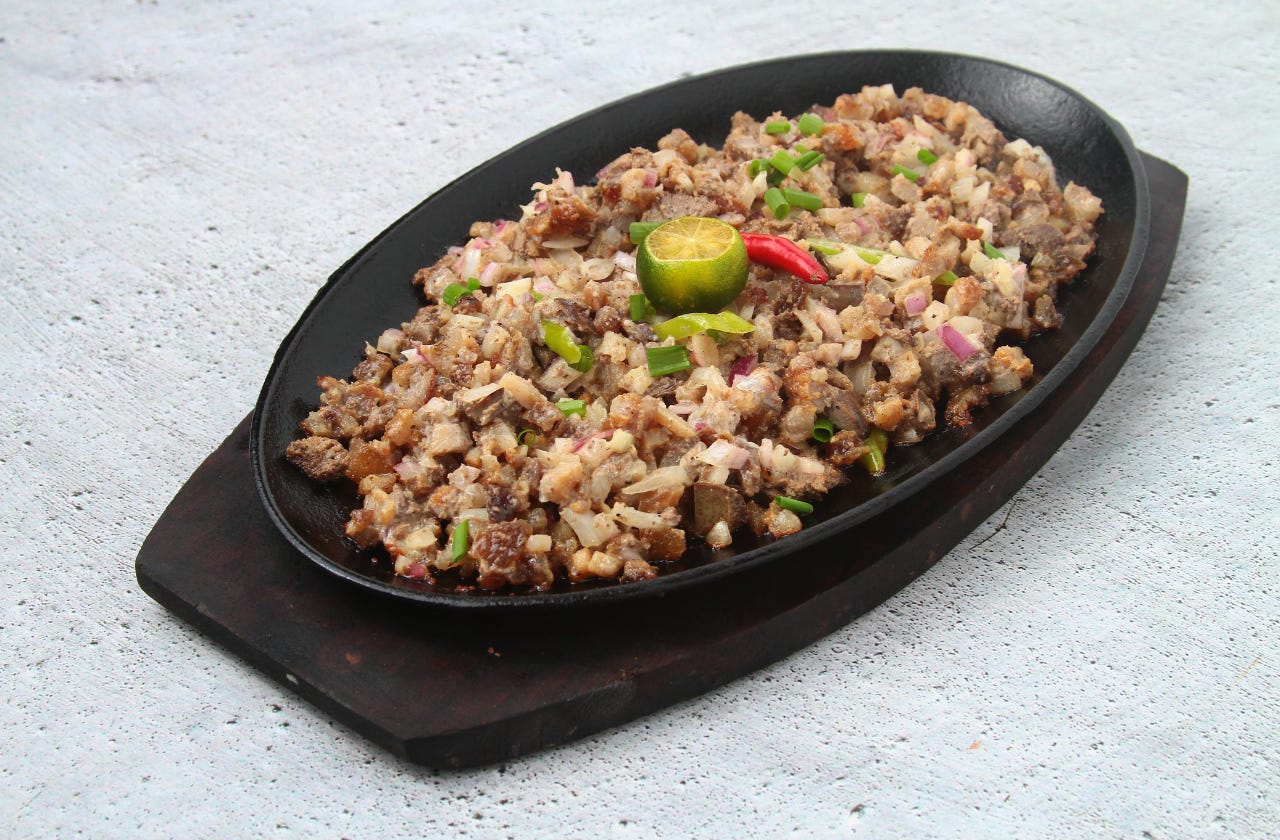
The sisig is known today as one of the most popular dishes in Filipino cuisine, and is seen as pulutan in bars to family-style restaurants as a main course. When foreigners want to try Filipino food, sisig is often mentioned as a must-try and is a popular choice for foreign visitors who want to be introduced to the cuisine.
This dish mainly consists of chopped pig’s head, mayonnaise, a fried egg, onions, calamansi, and chili all served on a grill platter, and is served sizzling hot. Its origins paint an illustrious past, one with varying origin stories and one of utilizing the unwanted parts of the pig. The dish also showcases the rich culinary traditions of the Kapampangans, who are known as the heart of Filipino cuisine.
Its Unlikely Pre-Colonial Past and Possible Origins Outside of Kapampangan Traditions
Not many know of sisig’s origins besides Aling Lucing’s store, but sisig has been believed to have ties to the pre-colonial past of the Kapampangan people. During this period the dish took on a completely different form that modern-day consumers would not recognize.
Recent research has suggested that sisig is not entirely Kapampangan in origin and that the dish may have various origins around the archipelago. The first recorded instance of sisig comes from a 1732 dictionary by Augustinian friar Diego Bergano where sisig is defined as a “green papaya salad or green guava with pepper, salt, and vinegar.”
There are other instances of similar dishes served in other regions of the country. The term “sisig” appears in a 1754 Tagalog-Spanish dictionary which describes a brine that is put in vinegar. Sisig has undergone various forms in its history.
Aling Lucing
The current version of sisig was popularized by Lucia Cunanan, also known as “Aling Lucing” at her carinderia in Angeles City, Pampanga in the 1970s. She developed the trademark sisig in 1974 when she served a dish of grilled and chopped pig ears and cheeks seasoned with vinegar, calamansi juice, chopped onions, and chicken liver served in hot plates.
Her version became popularized with the help of the Philippine Department of Tourism. According to popular oral tradition, she created a hawker stand that made these ingredients and served them as pulutan for the locals and US servicemen stationed at Clark Air Base. The air base had a readily accessible excess of meats that they readily gave away.
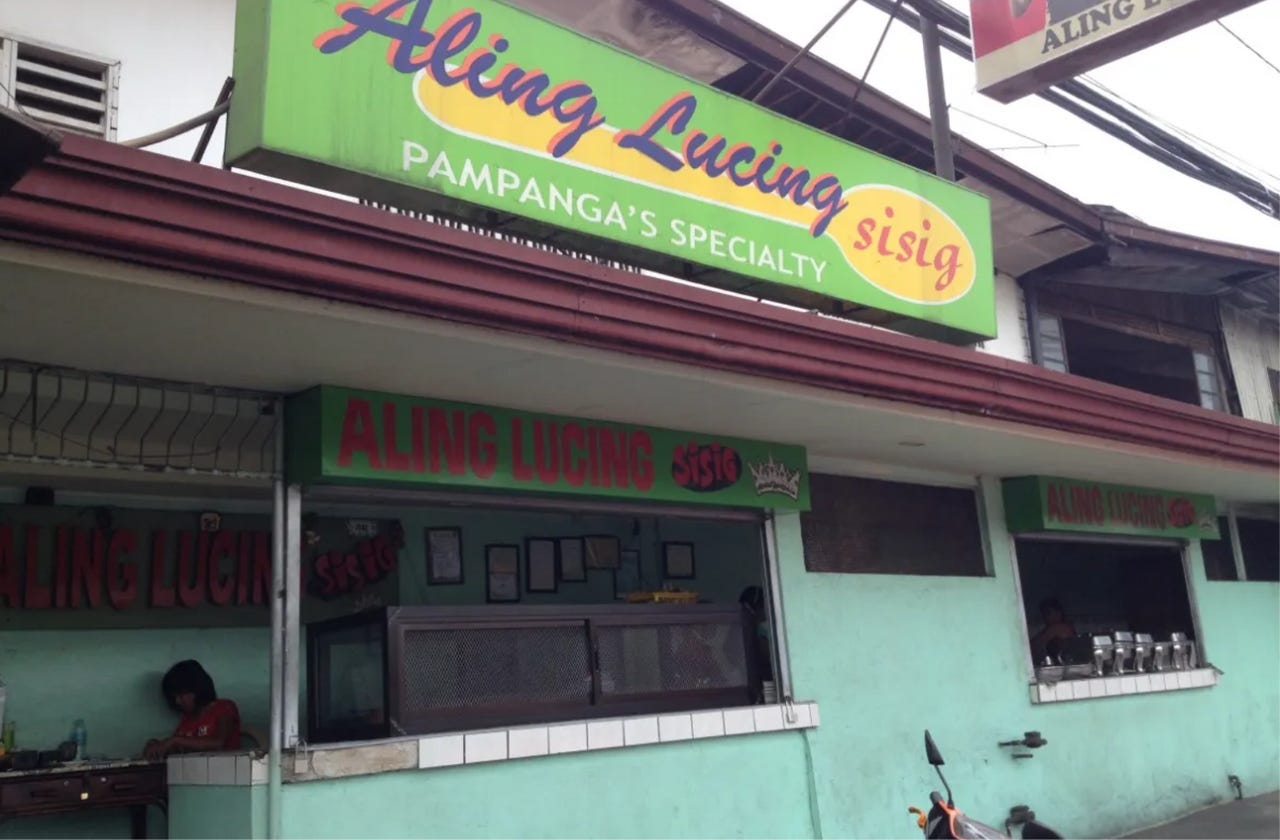
The use of pig heads was due to it being a cheap or free cut of meat as it was not used when preparing meals on base. Today it is regarded as an important part of Angeles City’s cultural and gastronomic heritage, as noted in Ordinance No. 405 in 2017 declaring “sisig babi” as tangible heritage of the city.
Possible Precursors to Aling Lucing
Similar versions of the chopped-up pork rendition of sisig is believed to have existed before Aling Lucing’s famous dish. Dom Martin recounts how “sisig matwa” or “sisig matanda” in Tagalog was a household meal in his San Fernando house in the 1950s.
This dish consisted of cut boiled pig maskara, minced onion, cucumbers, and soaked in vinegar. It was alternatively called “Quilo Babi” and was considered to be an ordinary meal.
An earlier version of sisig matwa from the Rivera family in the 1930s is served at Basisang Carinderia, which includes palm vinegar, black pepper, soy sauce, and salt.
Other Similar Dishes and Newer Versions of Sisig
Sisig is hardly the only chopped and grilled meat dish in the country. Dinakdakan from the Ilocos region uses chopped pig’s head that is boiled, chopped, grilled, and then mixed in a sweet and tangy sauce. Like sisig, it’s a popular pulutan dish. The pig’s brain is included in this version. Another Ilocano dish called kilawin uses similar ingredients, where the meat is cooked in vinegar.
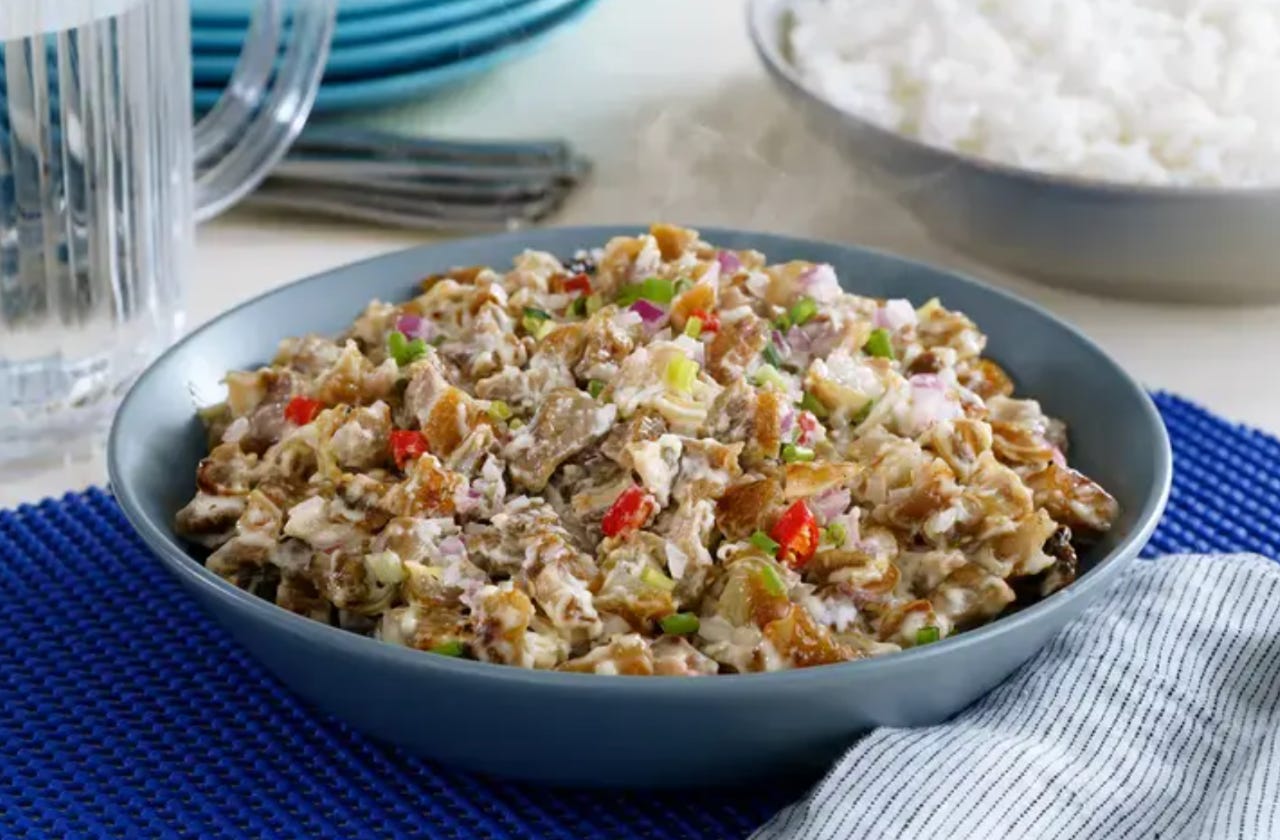
Since rising in popularity, sisig has taken on other forms. Pork and chicken liver may be used as a replacement for chopped pig’s head. Local chefs have also experimented with using chicken, squid, tuna, and tofu. Sisig has also been used as a filling in fusion dishes like sisig tacos and in sandwiches and salads, particularly in food carts among the diaspora communities.
Conclusion
While Kapampangans proudly claim sisig as originally a part of their culinary fabric, it is important to note that sisig takes on various forms and has local adaptations outside of Pampanga. While it is an important aspect of Kapampangan culinary tradition, it is also an important dish in the fabric of Filipino culinary traditions, and is part of a greater shared heritage.

Today, sisig stands as a vibrant symbol of Filipino creativity and represents a living dish with deep roots, numerous variations, and a lasting place on the Filipino table. Whether enjoyed as pulutan with friends or as a main dish in restaurants across the country and beyond, sisig continues to be a unifying factor in Filipino culture.
Its remarkable evolution is a reminder that Filipino food, like the people who create it, is dynamic, resilient, and richly layered. A heritage meant to be celebrated, shared, and savored.
Meron po bang vegetarian sisig ? Tokwa ? :)