


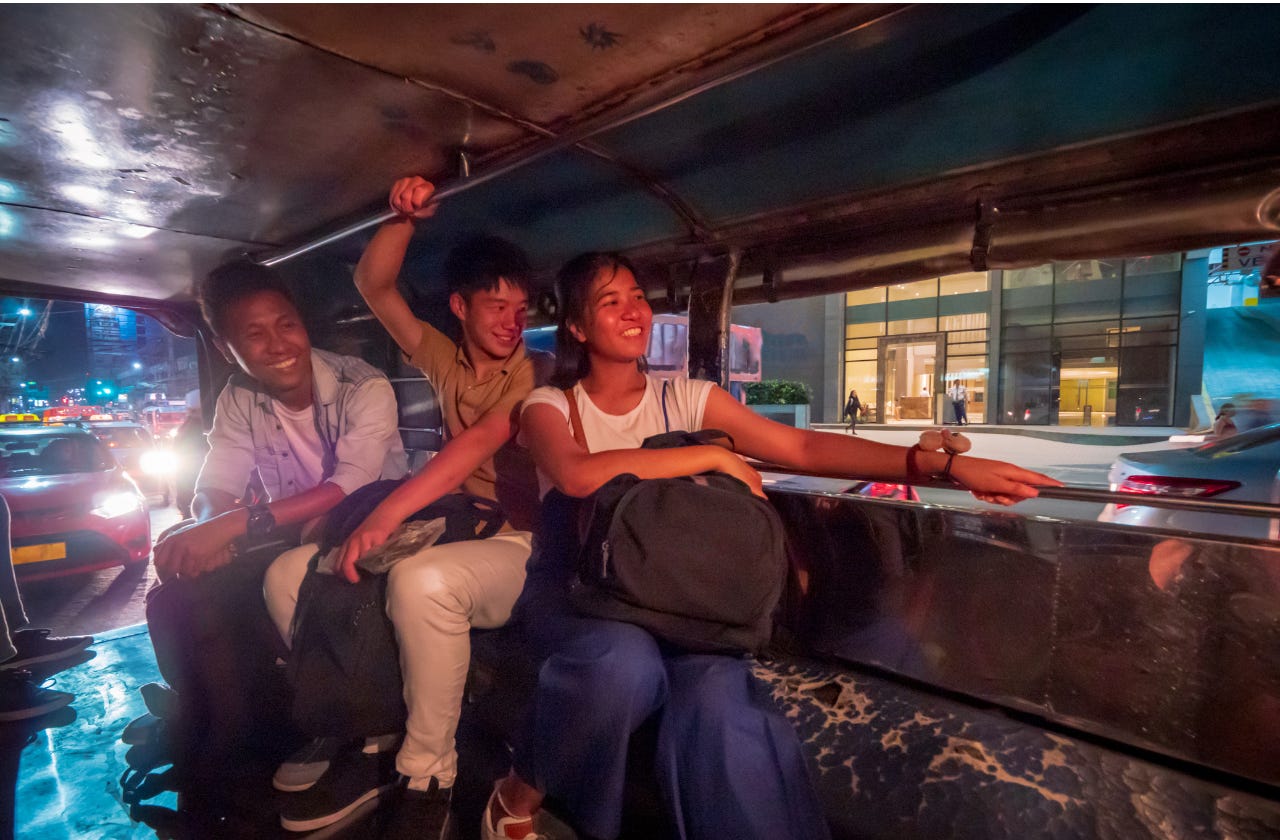
You usually hear it before you see it. The deep, rattling rumble of a diesel engine, a sudden, vibrating blast of a bass-heavy, maybe a ’90s power ballad or some local hip-hop—and a sharp, impatient honk cutting right through the thick afternoon heat.
I’ve taken so many jeepney rides in my life that I’ve come to take the whole experience inside this rolling piece of Filipino ingenuity for granted.
But today, as I outlined my article, the entire cabin is flashing before my eyes. I can practically smell the diesel and feel the vinyl seat sticking to my legs, like I just hopped off the rear bumper five minutes ago.
Getting On the Jeepney
If you’re a tourist standing on a sidewalk in the Philippines, walking with pedestrians along a street lined with food vendors, the jeepney looks like pure, unadulterated chaos roaring toward you.
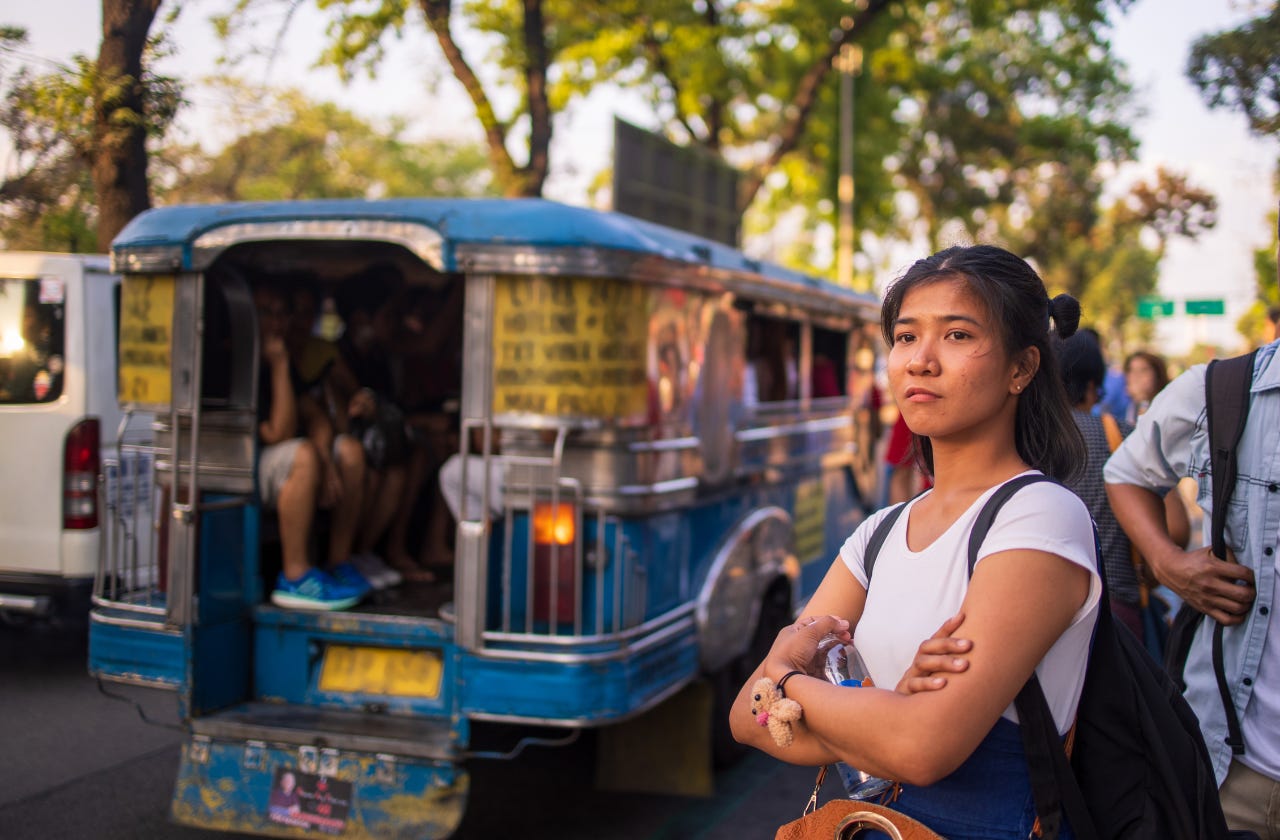
They are impossibly long, painted in screaming loud colors, dripping with silver tassels, and often packed to the very brim with passengers clinging to the back railings.
But the real story isn’t the flamboyant exterior. It’s what happens when the massive vehicle slows down just enough for you to hop on. You step up onto the metal rear bumper, duck your head, and slide onto the vinyl bench inside.
Instantly, the street noise almost fades into oblivion. Inside this jeepney is an entirely different world. There is a peaceful quiet that descends on the people inside. Perhaps it is out of gratitude for getting a ride, or for a few minutes to hours of being able to sit.
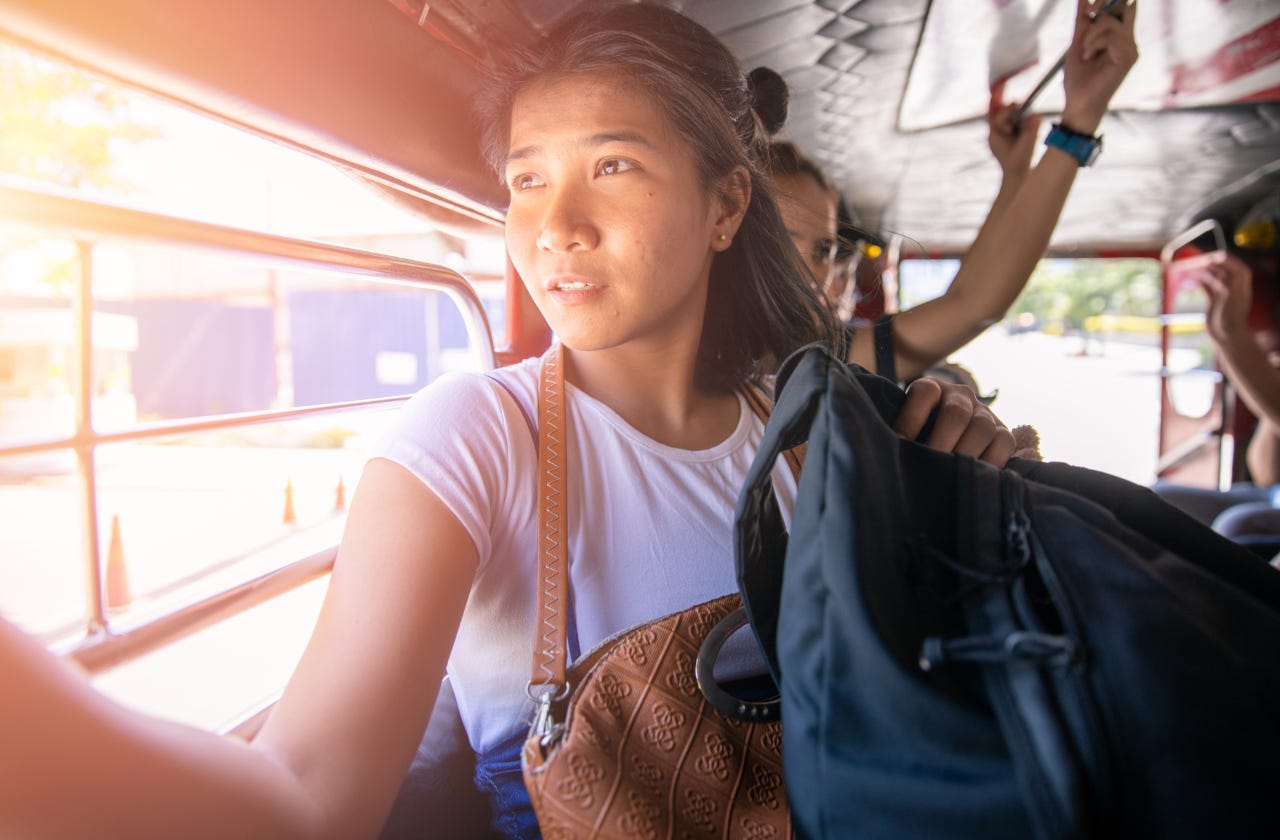
And there it is—people stare out the open, glassless windows, holding onto their bags, catching a breeze. And suddenly, you’re no longer just a bewildered tourist trying to survive the traffic; you’ve just entered a localized, moving ecosystem.
You are about to witness our brand of everyday civic trust.
Unspoken Rules of the Ride
The first thing you learn is that a jeepney is never truly full. There is always room for one more. When a new passenger climbs in, nobody rolls their eyes or groans. Instead, an unspoken, synchronized shuffle happens. It’s called usog.
Everybody scoots down an inch until a tiny sliver of space opens up. You sit knee-to-knee and shoulder-to-shoulder with total strangers. Personal space doesn’t exist here, but nobody complains. You just make room.
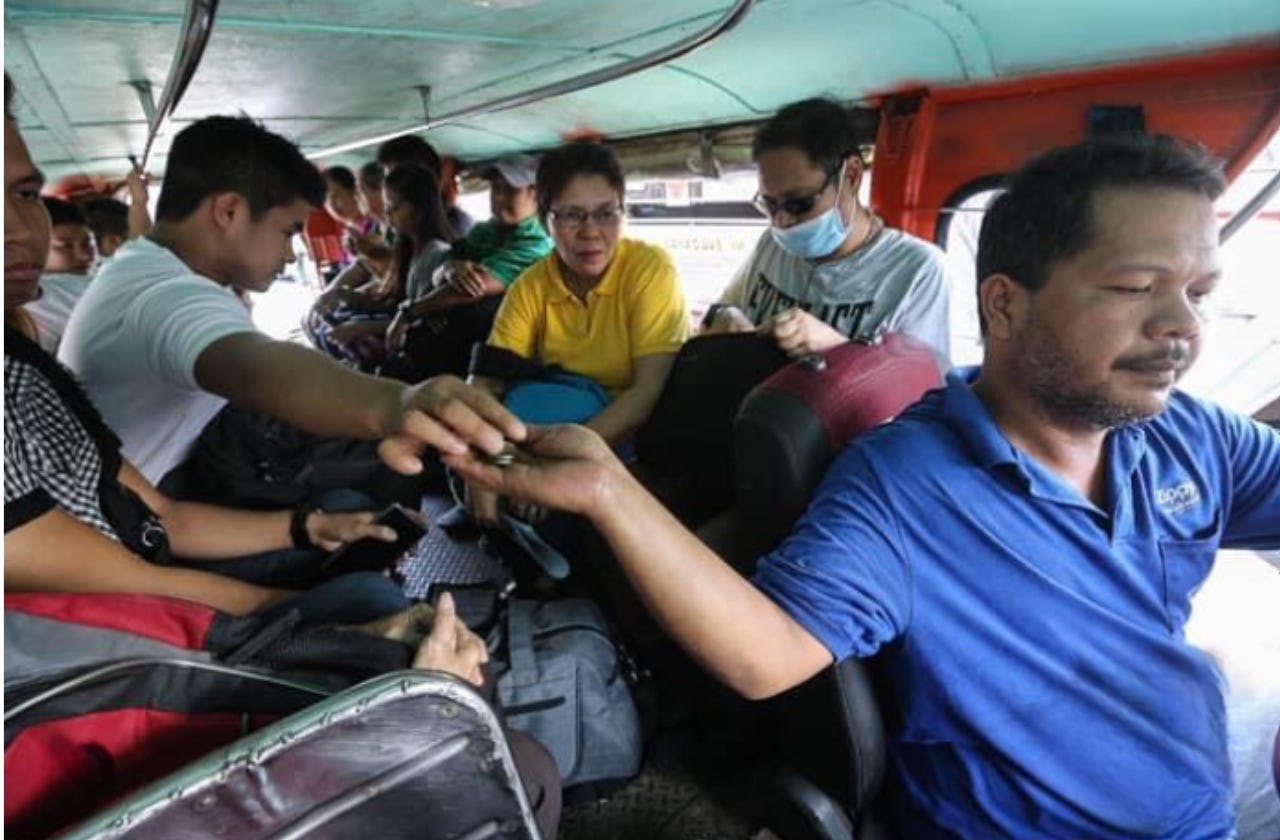
Then comes the main event of this culture ride: paying the fare. If you’re sitting right behind the driver, it’s easy. But if you’re squeezed in at the very back near the exit, the driver is miles away. So, you do what everyone else does. You hold out your coins, gently tap the shoulder of the person sitting next to you, and say, “Bayad po” (Here is my payment).
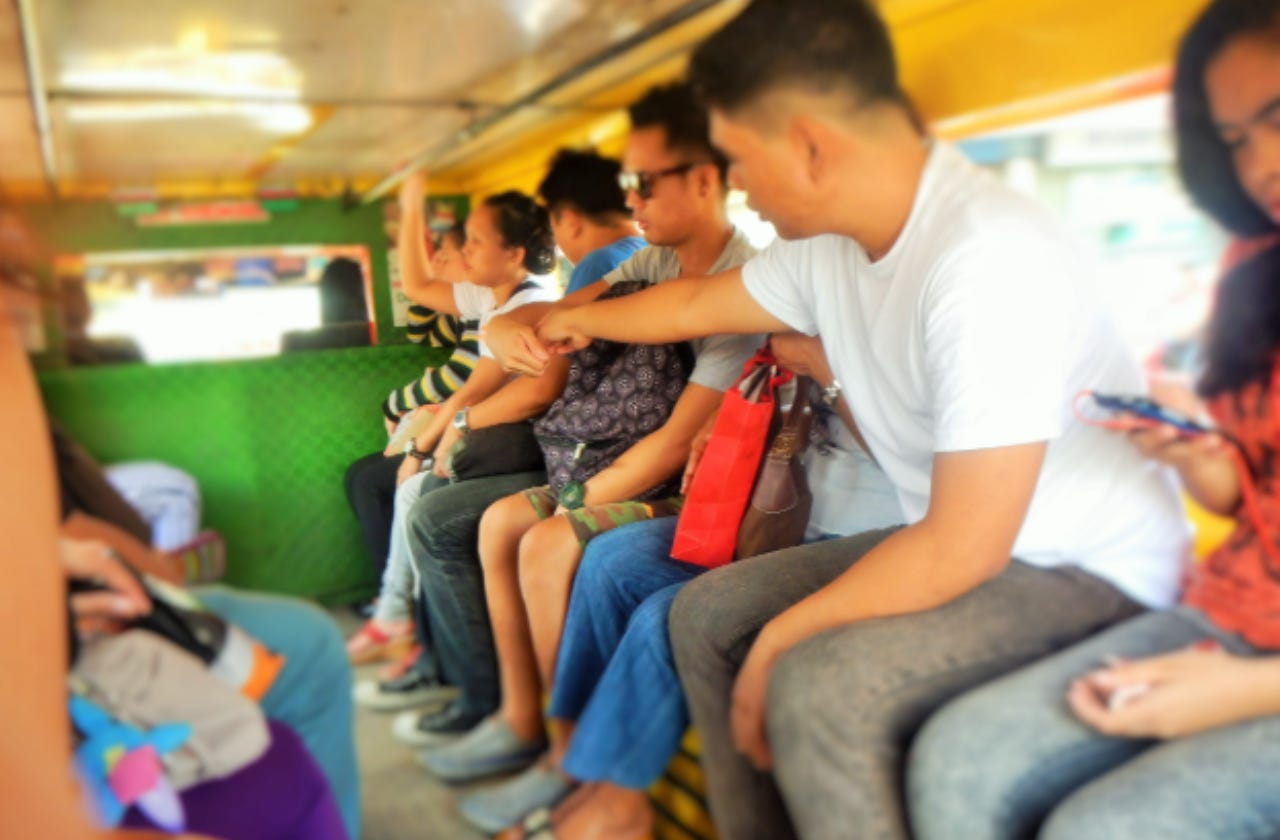
What happens next is genuinely amazing to anyone who didn’t grow up here. That stranger takes your money without a word. They don’t even really look at you. They just take it and hand it to the person next to them.
Hand to hand to hand, a completely organic bucket brigade of passengers passes your cash down the line. It travels past school kids, grandmothers holding market bags, and office workers in crisp button-downs, until it finally reaches the driver’s outstretched hand.
You don’t ask for a receipt. You don’t watch your coins like a hawk. You look out the window. And a few minutes later, the exact same thing happens in reverse. A tap on your shoulder, and a handful of coins—your sukli, or change—is dropped into your palm.
It passed through five different hands, and nobody kept a single cent. It happens thousands of times a day across the country, running on nothing but mutual trust.
The Quiet Genius of Everyday Systems
Meanwhile, the driver is pulling off a minor miracle.
He’s navigating heavy, unpredictable traffic on a manual transmission.
He’s listening to destinations shouted from the back, calculating fares based on distance in his head, remembering who handed him a fifty-peso bill versus a twenty, and digging into his wooden coin organizer to make exact change—all while steering with one hand and watching the sidewalk for new passengers to hail him down.
He doesn’t write anything down. He doesn’t use an app. He just knows.
Getting off is just as beautifully low-tech as it gets. There are no glowing electronic stop buttons. You say “Para po” (Stop, please). Or, if the diesel engine is too loud, you take a coin and clink it against the metal handrail on the roof, or you can tap the roof with your knuckle.
That sharp, metallic or thumping sound cuts right through the noise of the engine and the traffic. The driver hears it instantly and expertly pulls over to the curb.
As you stand up, hunched over beneath the low ceiling, the sea of passengers parts again. People automatically tuck their knees in tightly to let you squeeze past. They would even casually grab your heavy bag and pass it along to the passengers to help you lower it safely to the pavement.
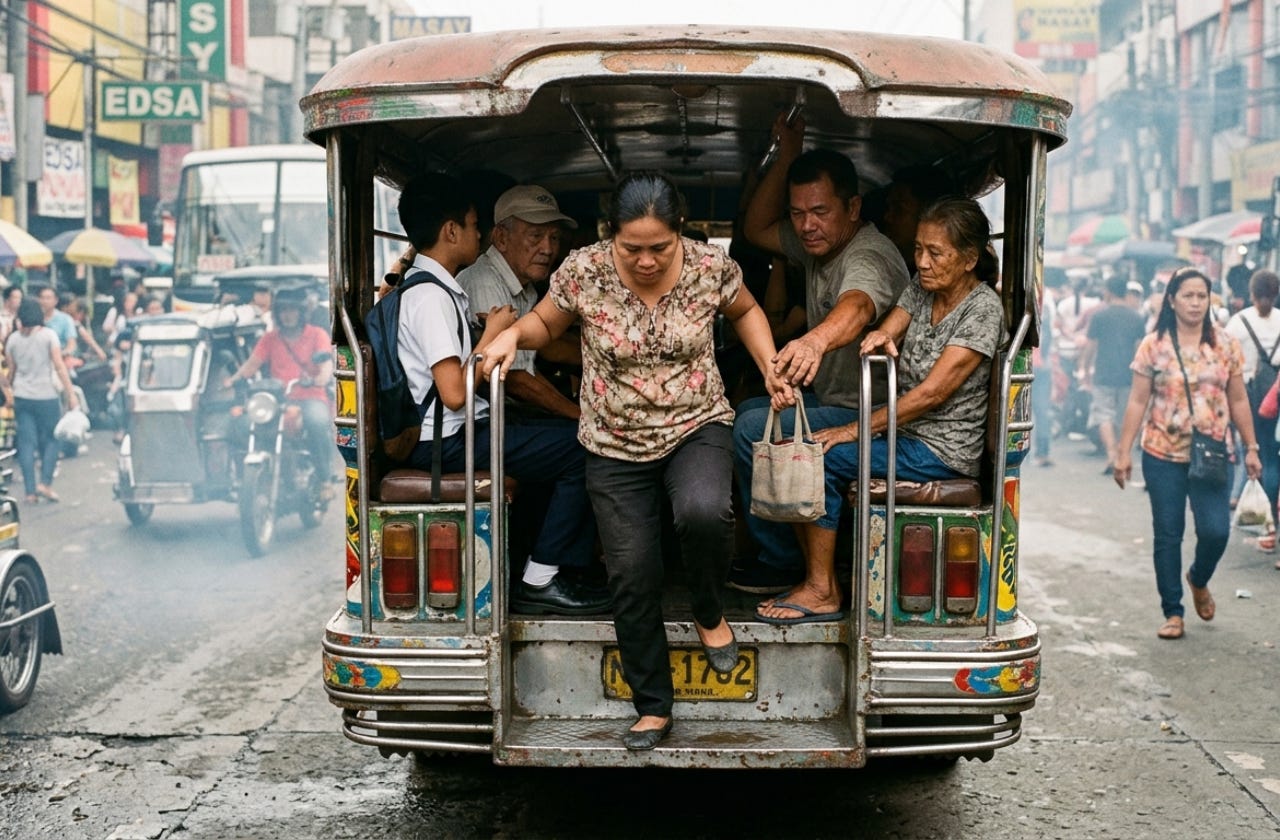
As you step off the jeepney, you may be treated to a cloud of exhaust…that’s part of the experience. You’re back in the busy streets.
For a few pesos (it’s Php13-15), you didn’t just buy a ride. You experienced front-row and center, the culture of everyday cooperation that keeps the Philippines alive and moving.