


New Year’s Eve in the Philippines does not stay politely in the background. It makes itself known, early and loudly.
By late afternoon, the streets are already awake. Christmas lights are still up, blinking from windows and balconies because nobody is in a rush to take them down. In some houses, they will still be there by the time February rolls around. The smell of food drifts past gates and down the road. Oil snaps in frying pans. Pots bubble steadily on stovetops that have been working since morning. Someone is slicing apples and oranges into careful circles, lining them up on a tray that will not be touched until midnight.
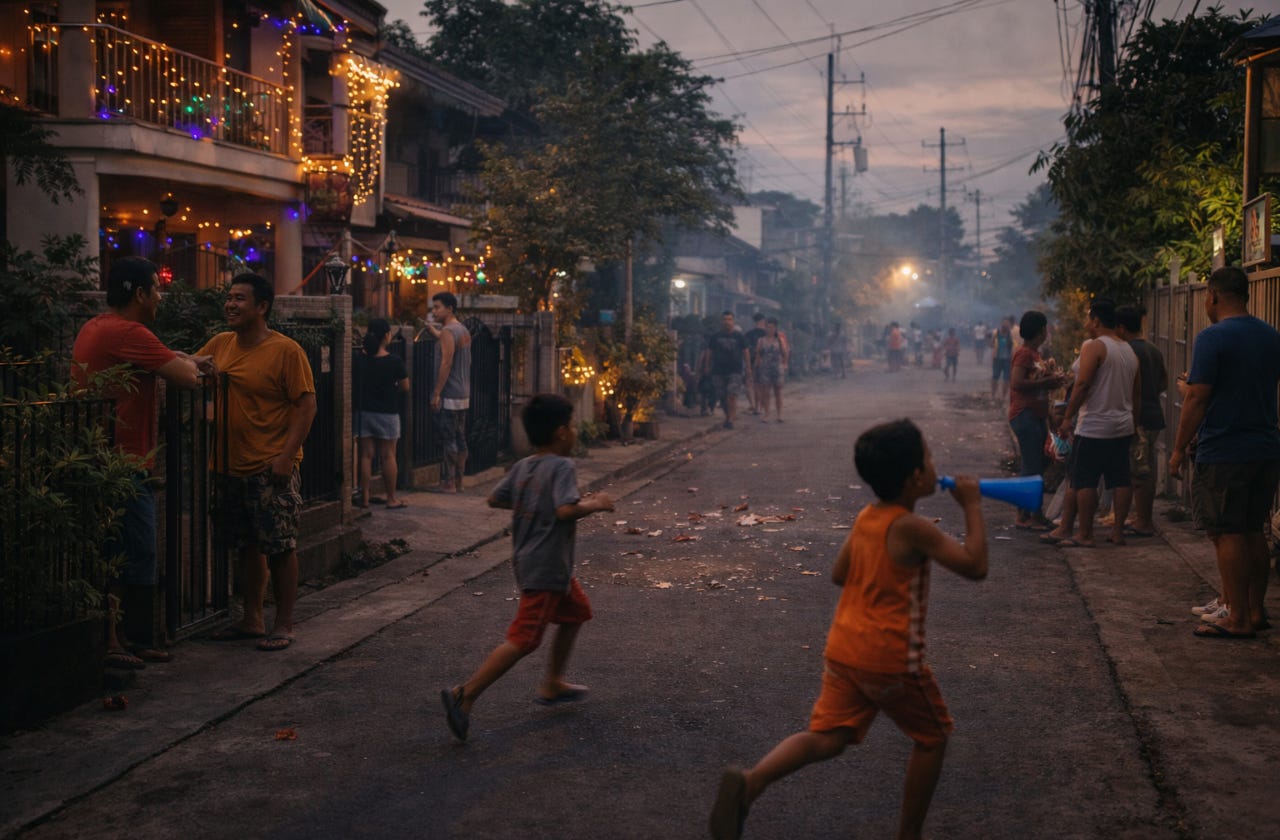
Outside, the neighborhood starts warming up. Music spills out from open doors and half-open windows. Karaoke machines get tested, adjusted, tested again. Firecrackers pop in short, scattered bursts, set off by people who clearly could not wait any longer. Conversations overlap across sidewalks. Greetings are yelled from one gate to another. Children run past holding plastic horns and noisemakers, already out of breath and louder than necessary.
Inside the house, the table fills fast. Pansit is set down with care, noodles kept long and intact. Sticky rice desserts sit wrapped in banana leaves, waiting their turn. Coins are counted, redistributed, then slipped into pockets. Polka-dotted shirts and dresses come out, worn with a straight face by people who will joke about it later but would never skip it.
Midnight is Loud on Purpose
As midnight creeps closer, the noise does not arrive all at once. It gathers.
Five-star firecrackers start popping somewhere down the street, spaced out and impatient. A piccolo goes off too early and makes everyone flinch. Someone laughs. Someone yells for the kids to move farther back. Car horns join in, held down for far too long, like the drivers have been waiting all year for permission. Whistles shriek. Those plastic trumpets sold outside sari-sari stores get blown until they sound more like dying animals than instruments.
In one house, pots and pans are already out. Someone is hitting a kawali with a ladle that has seen better days. Another person is shaking a reused ice cream container filled with coins so violently it sounds like it might crack. Nobody questions it. Everybody understands the assignment.
Not every family uses firecrackers, but nobody stays quiet. Bluetooth speakers are pushed to their limits. Karaoke machines hum before they sing, plugged in early like they are part of the electrical grid. Someone queues up “My Way,” and someone else immediately shouts for them not to. The song still plays, cut short halfway through, restarted, then replaced with something else entirely.
Children sprint across driveways holding sparklers, supervised from a distance by adults standing in doorways with folded arms and soft warnings that go mostly ignored. Someone’s tita keeps clapping off-beat. A kuya who has had one drink too many is already shouting Happy New Year to people who are not ready yet.

By the time midnight actually hits, the neighborhood is vibrating. Fireworks bloom overhead. Smoke hangs low. Voices pile on top of one another. Laughter spills out into the street. Someone cheers too early. Someone else misses the countdown entirely because they were refilling plates.
The noise does not stop at midnight. It stretches past it, stubborn and triumphant. Quiet was never invited.
Tables That Bend Mean a Year That Will Not Break
In Filipino households, the table does not stay neat for long.
By the time evening settles in, every flat surface is already working. Dining tables get extended. Side tables are pulled closer. Extra chairs appear from storage. Someone lays down newspapers where plates will inevitably overflow. The goal is simple and understood without explanation. There should be more food than anyone could reasonably finish.
Pancit is always there, arranged carefully so the noodles stay long and uncut. A tray of lumpia sits nearby, already missing a few pieces because nobody could wait. A pot of menudo or afritada is kept warm on the stove, lid lifted often just to check. Sticky rice desserts like biko and suman wait their turn, wrapped tightly and placed where they will not be forgotten. Bowls of fruit take up whatever space is left. Oranges, apples, and grapes are lined up deliberately, every piece round enough to pass inspection.
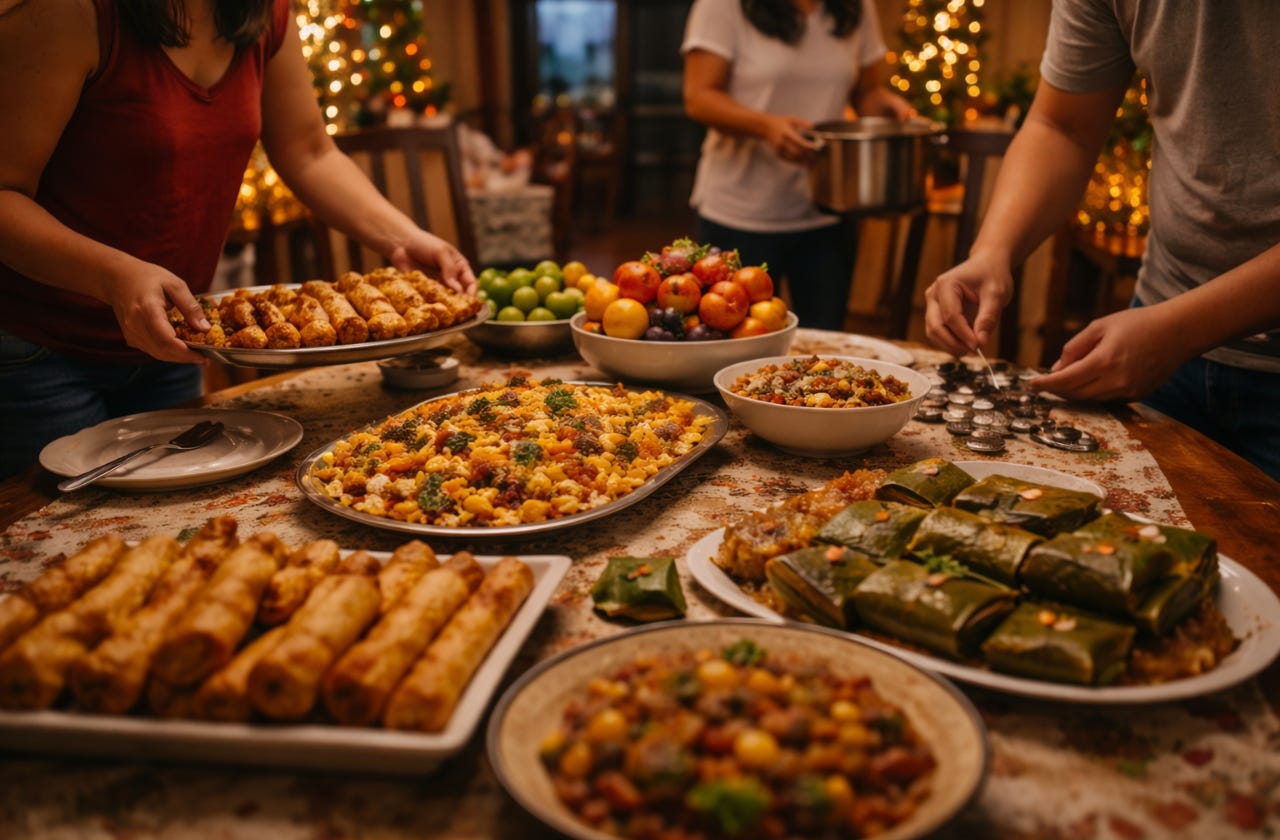
Some families keep twelve grapes aside, eaten one at a time at midnight, each bite paired with a quiet wish. Others skip the ritual but still make sure the fruit is there, just in case. Cakes share space with savory dishes. Ice cream is wedged into the freezer wherever it fits. Nothing is spaced out neatly. Everything is close, crowded, and ready.
Leftovers are part of the plan. Running out of food would be embarrassing. Overcooking is expected. Someone always packs containers before the night is over. Another person insists you take more even when your hands are already full.
Nobody asks if you are hungry. A plate is placed in front of you. Rice is scooped without waiting for permission.
Midnight is a Community Affair
When the clock hits twelve, doors do not stay closed for long.
Gates creak open. Screens slide aside. People step out onto driveways and sidewalks in whatever they happen to be wearing at the moment, house slippers included. Greetings are shouted across the street. Someone yells Happy New Year to a neighbor whose name they have never actually learned. Hands wave over fences. Hugs happen quickly, sometimes awkwardly, sometimes tight enough to linger.
Families greet relatives they see all the time and relatives who only appear during holidays. Laughter cuts through the noise. Short prayers are spoken out loud, then forgotten in the chaos. Someone suddenly gets emotional and blames it on the smoke. Another person pretends not to notice.

Children stay up long past their usual bedtime, wide-eyed and unstoppable. They run between adults holding sparklers down to their last glow. Parents keep calling after them, half-warning, half-smiling. Teenagers hover nearby, pretending they are too cool for this while still filming everything on their phones.
Someone starts recording the moment, phone held high, even though everyone knows it will come out shaky and too loud to understand later. The point is not the video. The point is being there when it happens.
This celebration spills beyond the house. It always has.
The Morning After Moves Slowly
January first in the Philippines does not begin early.
People wake up late, stepping around decorations that were never taken down. The house smells faintly like smoke and food from the night before. Leftovers make their way back onto plates without ceremony. Pansit gets reheated. Rice is scooped straight from the pot. Someone insists dessert still counts as breakfast.
Visits begin sometime after noon. Relatives drop by unannounced and are welcomed anyway. Plates are refilled without asking. Stories from the night before get retold with extra details added in. Someone laughs about who fell asleep first. Someone else insists they were not that drunk.
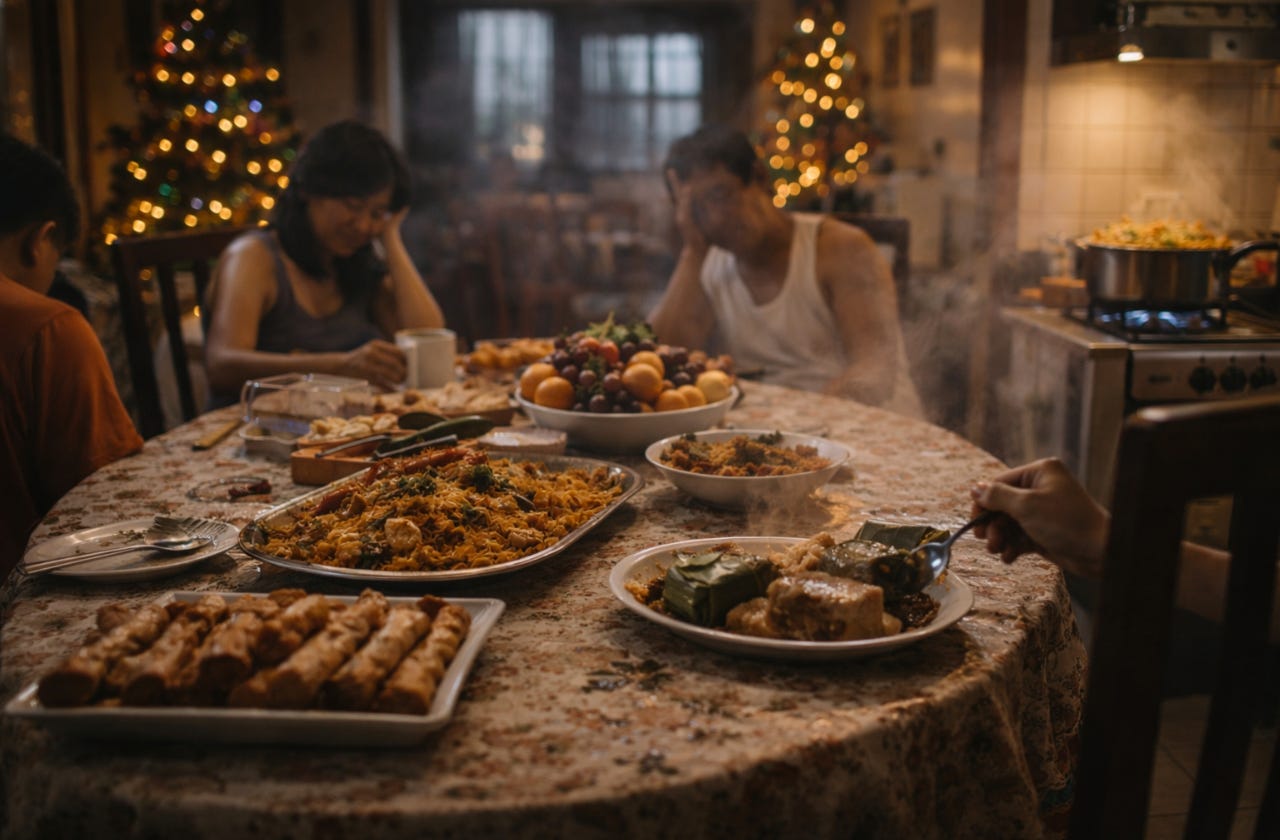
Decorations stay up longer than planned. Lights keep blinking. Balloons lose air slowly. Nobody is in a hurry to reset the house just yet.
Plans for the year exist, but they are spoken casually, if at all. The day is more about settling in than starting over. The year has arrived. Everyone is still catching up to it.
A Year Should Be Announced
New Year in the Philippines comes with noise, food, and company by default.
It arrives through firecrackers echoing down the street, tables crowded with dishes, and neighbors calling out greetings through open gates. It shows up in leftover containers stacked by the sink and plates pushed toward guests who insist they are already full.
When the celebrations finally slow down, one thing is clear. The year did not arrive quietly, and nobody faced it alone.