


Coming home to Bicol, I realized that at a young age, I had developed a specific relationship with the ground beneath my feet. It is fertile, it is beautiful, and it is volatile. We live in the shadow of Mayon or Isarog, in a land that frequently shakes and floods. For me, this environment triggers a lovely memory of Mexico.
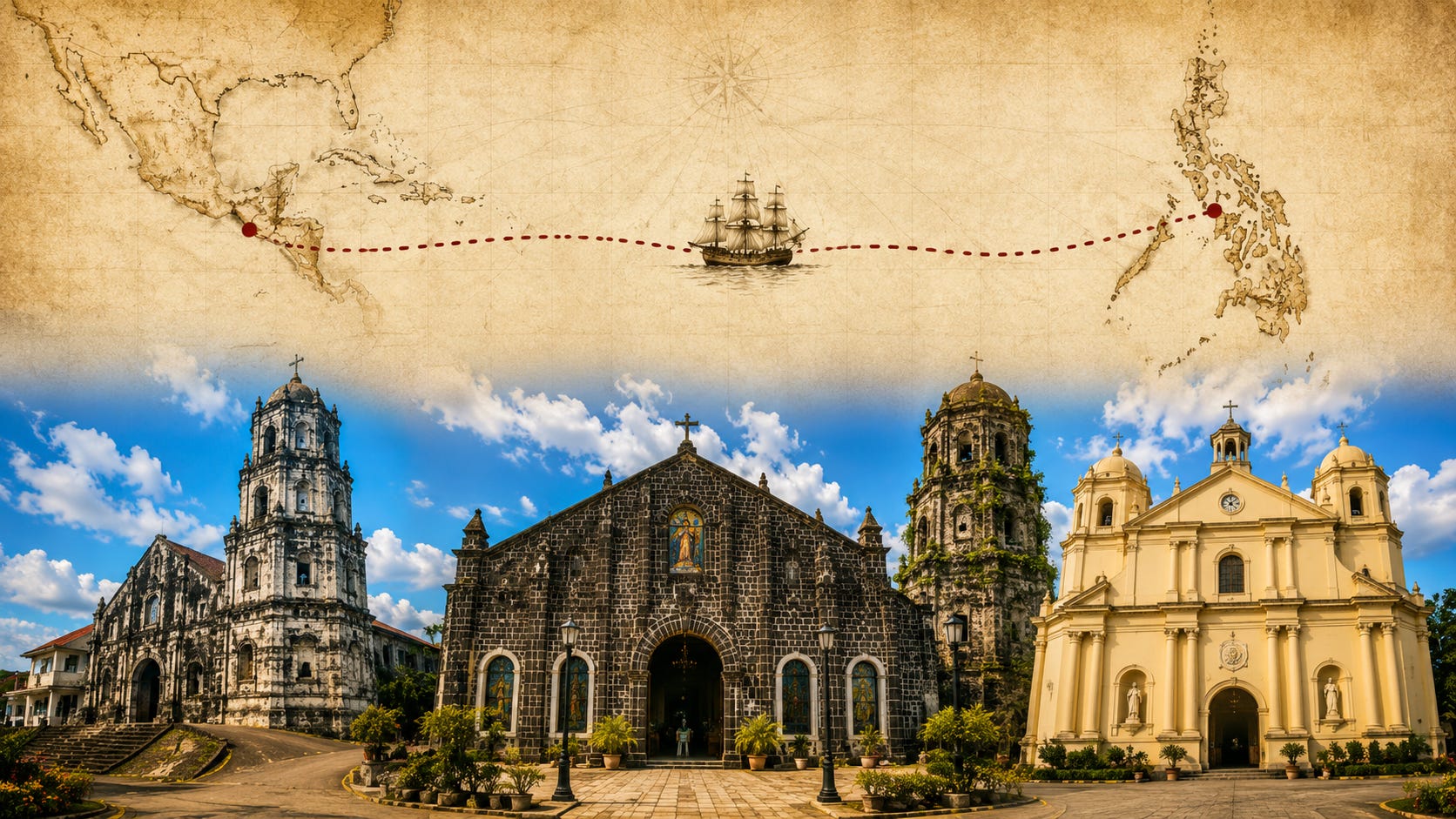
I lived in Mexico for a few years as part of an expatriate assignment with Nestlé. I realized then that the connection between Bicol and Mexico is more than just a footnote in history. It is written in stone across our landscape. For over 250 years, the Philippines was governed not directly from Madrid, but through the Viceroyalty of New Spain, which is now Mexico.
The Manila Acapulco Galleon transported not only silk and silver over the Pacific but also an architectural philosophy seen in the Spanish-era churches I find here in Albay and Camarines Sur.
I see the architectural cousins of the structures I used to walk past in Puebla, Oaxaca, and Mexico City. We share a specific heritage: In both places, the Spanish colonizers attempted to build the grandeur of Spain… but both lands forced them to adapt.
Here is a look at three of our most significant churches: Daraga, Camalig, and Naga—through the lens of someone who has lived in both halves of this transpacific history.
Our Daraga Church: The Churrigueresque Connection
In Daraga or Legazpi, the church of Nuestra Señora de la Porteria is our constant landmark. Perched on a hill, it overlooks the town and the volcano. When I look at its facade, I am immediately reminded of the lavishly ornamented 18th-century parish churches in central Mexico. The architectural style is distinctly Churrigueresque - a type of Spanish Baroque distinguished specifically by elaborate ornamentation, such as gold leaves carved from light limestone, seen in facades in Mexico.
The comparison is fascinating. What was used to build churches in Mexico was tezontle, a porous red volcanic rock, while we used our own gray volcanic debris. This is the reason why our church structure feels heavier and more somber than its Mexican counterparts, yet it retains the same DNA.
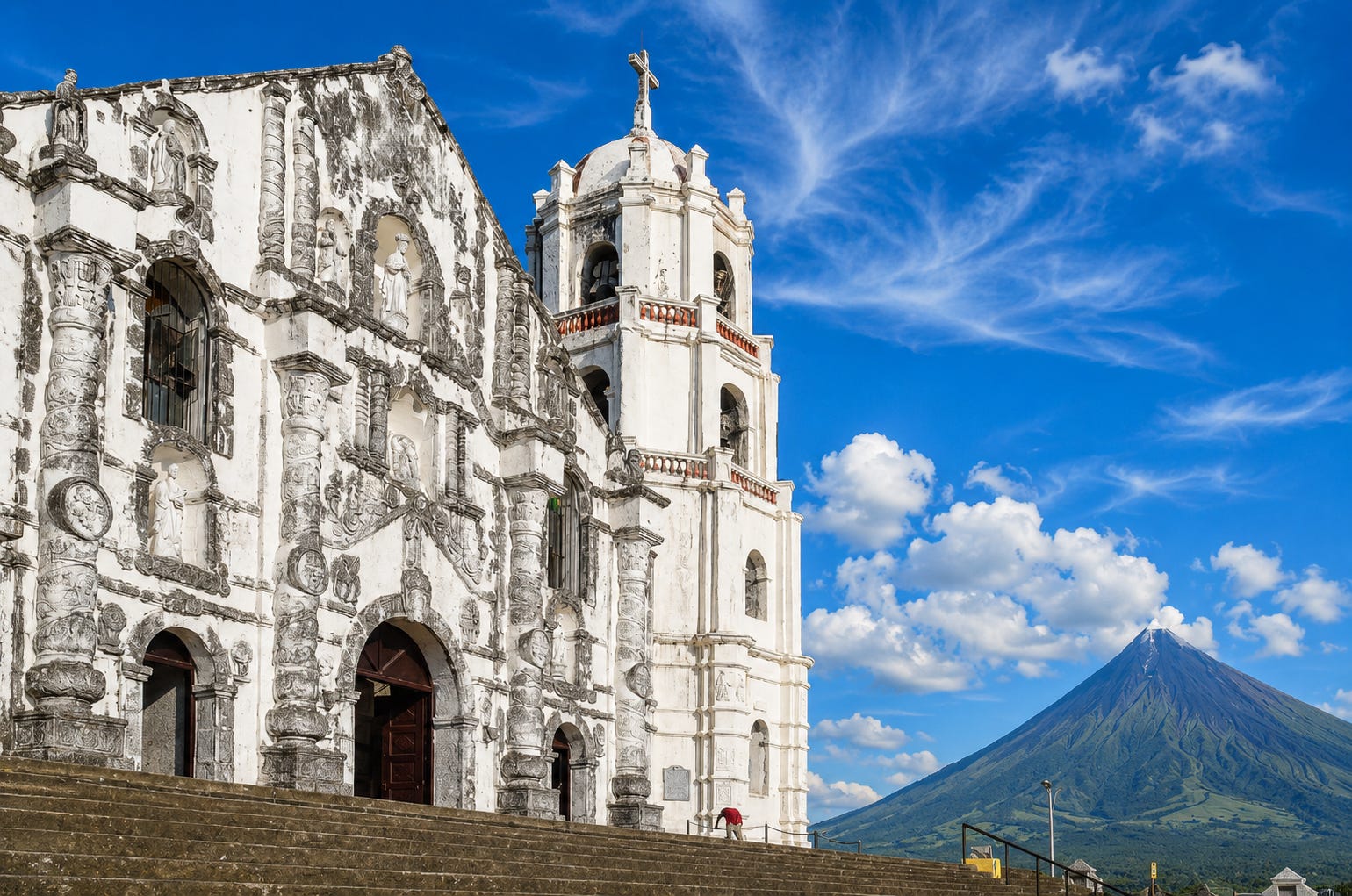
The hallmark of the style transported by the galleon trade was the four “Solomonic” columns on the façade - twisted pillars that spiral upward.
However, the local artisans left their mark. In Mexico, these columns might be adorned with grapevines. In Daraga, if you look closely at the structures, you see tropical flora - ferns and broad leaves native to Bicol.
For me, the most defining feature of the church is its location. The location defines its character. I reckon that it wasn’t built on the hill for aesthetics; it is there as a survival tactic. It was constructed in 1773 to replace the church in Cagsawa, which was vulnerable to lahar and flooding.
The ruins of Cagsawa are a tourist spot, but Daraga Church is the survivor. The community is anchored to it. It serves as a reminder to residents that they have learned to live with the volcano, rather than just beneath it.
Camalig Church: The Fortress Monastery
Located some short distance away in Camalig is the St. John the Baptist Church. This building does not remind me of the ornate city cathedrals of Mexico, but rather the “fortress monasteries” (conventos fortaleza) found in the Mexican states of Hidalgo and Morelos.
In the 16th century, monasteries in Mexico were built to look like bunkers - massive walls, few windows, and crenelations for defense. Camalig feels exactly like this. It is squat, solid, and imposing. This is “Earthquake Baroque” in its purest form.
The Spanish engineers quickly realized that tall, slender European naves would collapse in the Pacific Rim. The solution in both Mexico and Bicol was identical: widen the base, lower the ceiling, and thicken the walls. Camalig Church is built from solid blocks of volcanic rock, hewn by the ancestors of the current townspeople.
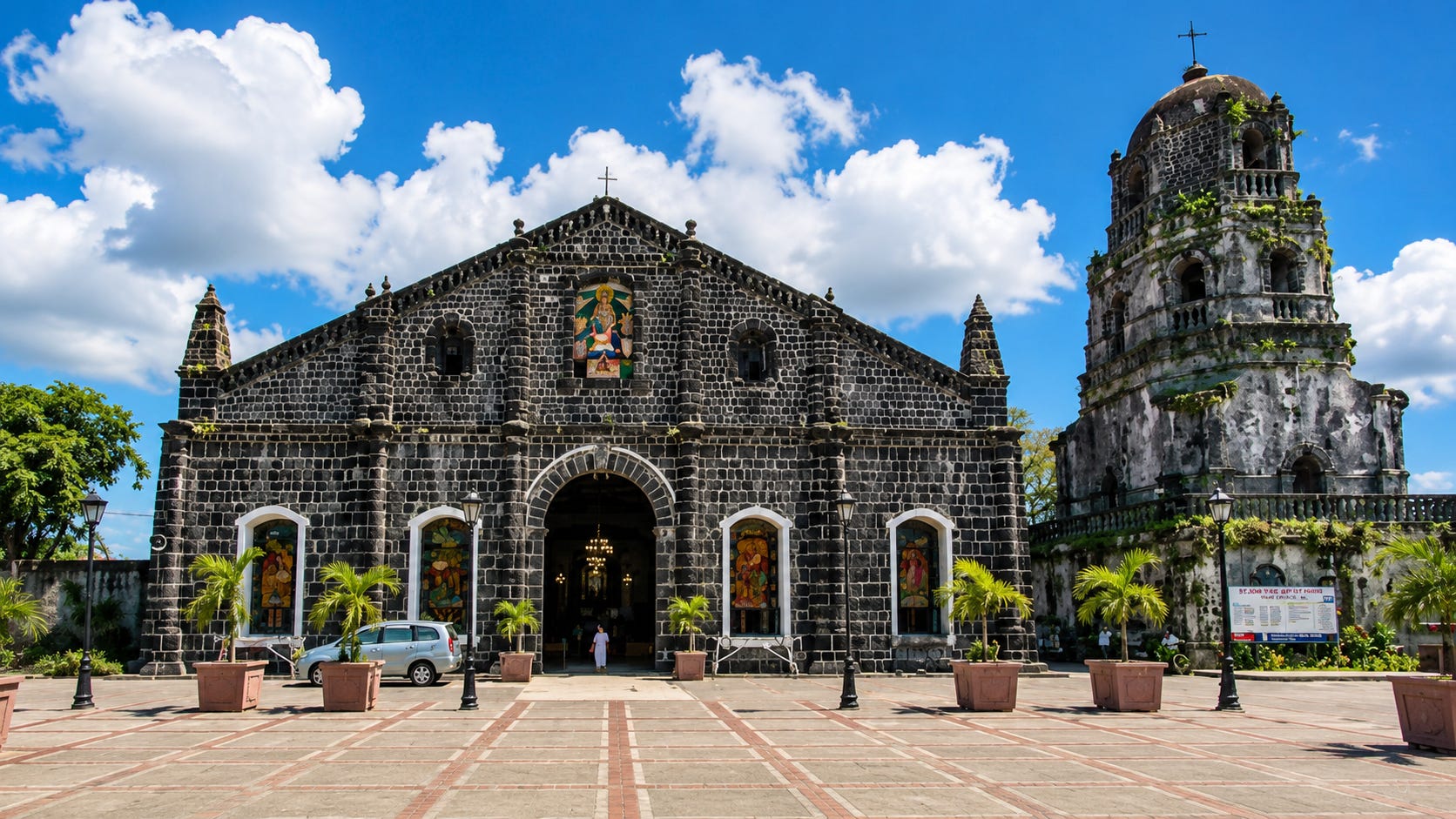
While the Daraga Church enjoys its intricate lacework, the Camalig Church prioritizes integrity in structure. It is very unassuming, almost practical. Inside, the walls are so thick that they create natural insulation. Stepping in from the humid Bicol afternoon, the interior feels cool, much like the old stone churches in Oaxaca.
For the people of Camalig, this density is functional. For generations, it has served as the primary evacuation center during typhoons and volcanic unrest. It is the town’s safe room. The architecture provides a psychological sense of permanence in a town where bamboo and wood houses are often damaged by storms.
Naga Cathedral: The Plaza Mayor
Where was it said that in Bicol, all roads eventually lead to Naga City? The Naga Cathedral, officially known as the Metropolitan Cathedral of Saint John the Evangelist, is the center of Naga City’s religious culture. If I stand in the plaza fronting the cathedral, the layout of the space feels eerily familiar to anyone who has lived in Latin America.
During the Spanish era, the Law of the Indies required a grid system for towns, centered on a Plaza Mayor flanked by the church and the government building. Naga follows this blueprint perfectly.
The Cathedral is grand, Romanesque, and imperial. It commands space. The interior of the Naga Cathedral holds a specific detail that bridges the two cultures: trompe-l’oeil ceilings.
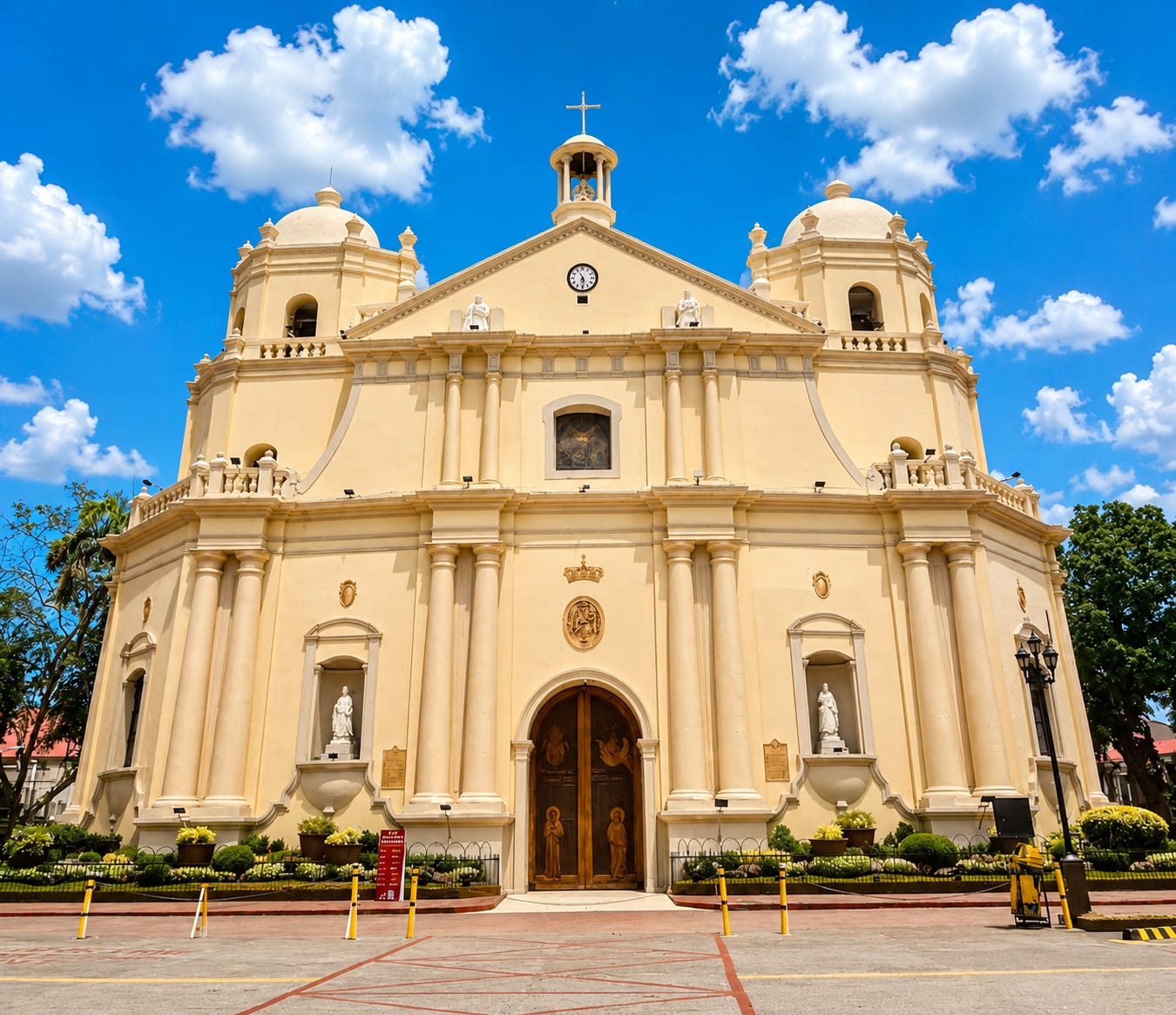
In many Mexican churches, especially where budget or earthquake concerns prevented the installation of heavy stone carvings on the roof, artists painted the ceilings to resemble 3D moldings. Naga employs this exact technique. The ceiling appears intricately carved, with depth and shadow, but it is actually a flat surface painted to deceive the eye.
In Mexico, “La Guadalupana” is the heart of Mexican identity. Our Lady of Peñafrancia is the heart of ours. The cathedral is the focal point of this devotion, as the Basilica of Guadalupe is Mexico’s. It is designed to hold thousands, creating a space where the community cement its identity.
When the Naga Cathedral Church fills up with people, it reminds me so much of the pilgrimage sites in Mexico, because here too, the air becomes heavy with heat, and incense, and the weight of prayers.
Built on Shared Ground
The Spanish era left a chain of stone structures that encircles the globe, from the arid plains of Mexico to the lush volcanic slopes of Bicol. But while the blueprints may have arrived on the Galleons, we used our own stones and hardened ashes, making the execution entirely local.
We carved our own plants into the facades. We adapted the designs to survive our typhoons and earthquakes. Living here, I see these churches as the physical evidence of a shared history between Mexico and the Philippines. Two nations that learned how to build something permanent on shaking ground.